Warning: foreach() argument must be of type array|object, bool given in /home/u780765189/domains/akshayseed.com/public_html/wp-content/themes/akshayseed/single.php on line 8
Best High Oil Content Mustard Seeds for Commercial Expellers: Top Rai Varieties Guide
Maximizing Expeller Crushing Recovery: The Complete Commercial Guide to High Oil Mustard Seeds
Operating a commercial edible oil expeller requires constant monitoring of raw material crushing margins. Across Gujarat and Rajasthan, oil mill aggregators and commercial mustard farmers actively evaluate High Oil Mustard Seeds to optimize processing output per metric ton. Indian mustard (Brassica juncea), widely recognized as Rai, commands premium market valuations when grains deliver above-average oil extraction percentages alongside low residual cake moisture.
Securing higher prices at regional wholesale mandis requires choosing seed lots with verified oil density. Many growers face substantial discounts from mill buyers because traditional varieties frequently yield below 37% oil extraction. Furthermore, high proportion of light, hollow grains reduces overall expeller efficiency while inflating mechanical processing costs. Therefore, progressive farm syndicates invest deliberately in tested research hybrids that consistently deliver dense, oil-rich cotyledons.
Pioneering seed developers like Akshay Seeds address processing bottlenecks by supplying certified varieties with superior oil genetics. Sourcing lab-tested foundation seed ensures high thousand-grain weight and high pungency profiles demanded by wholesale millers. Consequently, farmers achieve higher auction bids while processing units secure superior crushing recovery rates.

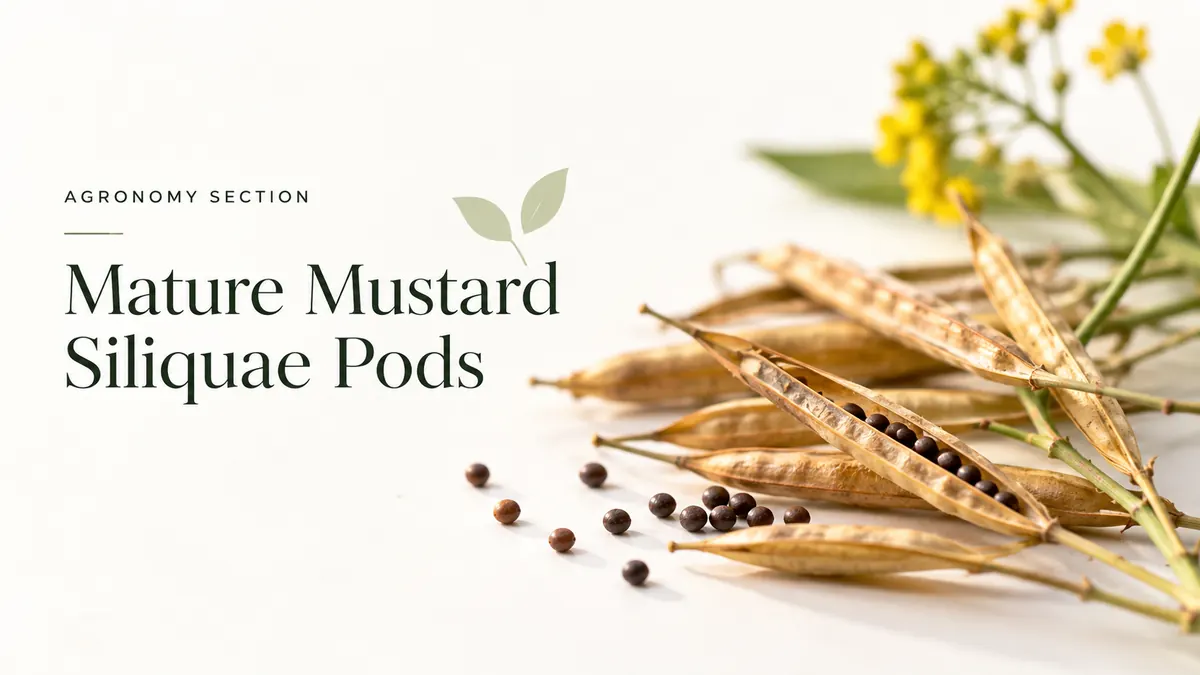
Quality assessment of bold black mustard seeds with high oil content for commercial oil mills.
What Determines Commercial Crushing Recovery in Mustard?
Commercial oil expeller operators assess incoming seed consignments using four physical and biochemical criteria:
Realized Oil Percentage (Recovery Margin): Standard domestic varieties hover around 36% to 38% recovery. In contrast, advanced research lines exceed 41% to 42.5% oil recovery, generating extra revenue on every bag processed.
1000-Grain Test Weight (Boldness Metric): Grains weighing over 5.0 to 5.5 grams per thousand seeds contain larger cotyledon structures and thinner seed coats. As a result, expellers extract more clear oil and less fibrous waste per crushing cycle.
Seed Moisture at Delivery: Seeds entering expellers must register between 7.0% and 8.0% moisture. Grains with higher moisture produce cloudy oil emulsions that require expensive secondary filtering.
Volatile Allyl Isothiocyanate (Pungency Level): Consumers in northern and western India demand strong, sharp mustard pungency (teekhapan). High-pungency seeds command top pricing from premier kachi ghani cold-press brands.
Evaluating Certified Hybrid Rai vs. Conventional Farm Grains
The performance gap between high-yield hybrid seed and unselected local grain directly impacts farm-gate profitability:
Crushing Yield Advantage: Crushing 100 quintals of ordinary local seed typically produces 3,700 kg of oil. Conversely, crushing 100 quintals of certified Mustard seed yields up to 4,150 kg of pure oil, generating an extra 450 kg of saleable edible oil from the identical raw volume.
Thinner Seed Husk Ratio: Research hybrids feature thinner outer pericarps. This physical trait reduces wear and tear on expeller worms while producing higher-protein de-oiled cake (DOC) that fetches better prices from livestock feed mills.
Synchronized Pod Maturity: Open-pollinated crops often mature unevenly, forcing farmers to harvest while lower siliquae pods remain immature. Hybrid seeds mature uniformly, preventing green-grain contamination that spoils oil clarity.
Superior Germination Stand: High oil seeds must establish deep taproots to absorb sulfur from soil layers. Reviewing early field preparation in our guide to seed germination helps growers secure uniform, dense crop emergence.
Agronomic Practices That Boost Oil Content in the Field
Maximizing oil percentages requires disciplined field management beyond genetics alone:
Adequate Sulfur Nutrition: Sulfur acts as the fundamental building block for oil synthesis in oilseeds. Applying 20 kg to 25 kg of agricultural-grade elemental sulfur or single superphosphate (SSP) per acre during basal land preparation enhances oil content by 1.5% to 2.5%.
Optimized Sowing Window: The ideal planting period across Gujarat ranges from October 1st to October 25th. Planting during this window allows vegetative growth to finish before winter flowering, avoiding high temperature stress during pod development.
Pre-Sowing Seed Sanitation: White rust and downy mildew stunt leaf area, limiting photosynthesis and reducing oil accumulation in maturing pods. Applying the protective techniques detailed in our guide on seed treatment benefits protects young seedlings against fungal damage.
Irrigation Timing at Pod Filling: Apply the final irrigation when siliquae pods begin swelling. Withholding water too early leads to shriveled grains with reduced oil reserves, while over-irrigation encourages stem rot (Sclerotinia).
Thriving high-yield mustard crop with dense pod formation ready for harvesting in Gujarat.
Strategic Crop Rotations for Commercial Oilseed Producers
Sustaining high yields requires rotating mustard with compatible crops to maintain balanced soil nutrient profiles:
Monsoon Soil Regeneration: Prior to autumn mustard planting, cultivating nitrogen-fixing groundnut seeds improves soil porosity and deposits organic nitrogen in the root zone.
Drought-Resilient Kharif Intercropping: Rotating fields with high-biomass crops like bajra seeds cleanses soil profiles of persistent broadleaf weeds while generating quality livestock fodder.
High-Value Alternative Spices: In well-drained light loams, dedicating adjacent acreage to export crops like cumin seeds diversifies market exposure during the winter harvest window.
Systematic Calendar Execution: Aligning multi-crop planting schedules across shifting seasonal windows is simple when following the operational framework in our guide on season-wise crop planning.
4 Costly Mistakes That Reduce Mustard Oil Recovery
Oil mill procurement managers identify four common farming and storage mistakes that degrade seed quality:
Harvesting Grains Before Complete Pod Desiccation: Harvesting while pods retain high chlorophyll leads to green seed husks. These unripe grains impart an unpleasant bitter taste and muddy green hue to refined and cold-pressed oils.
Storing Grains in Damp Warehouses: Storing harvested mustard above 9.0% moisture activates internal lipolytic enzymes. This enzymatic breakdown converts triglycerides into free fatty acids (FFA), increasing acid value and devaluing the lot for commercial refining.
Excessive Nitrogen with Zero Sulfur: Applying heavy doses of urea without balancing sulfur produces tall, weak plants with low grain density. Nitrogen stimulates excess vegetative bulk while sulfur governs oil and protein formation in the seed.
Planting Unverified Local Farm Seeds: Using uncertified grains from local grain merchants leads to genetic variation, weak branching, and low oil yields. Sourcing authentic, lab-tested seed stock from Akshay Seeds guarantees consistent seed size, high oil content, and top auction bids.
Frequently Asked Questions (FAQs)
What is the average oil percentage in high oil mustard seed varieties?
High oil hybrid varieties deliver between 40.0% and 42.5% total oil content under optimal management, compared to 36.0% to 38.0% in traditional local varieties.
Why do commercial oil mills pay higher prices for bold mustard seeds?
Bold seeds with high 1000-grain weight have a higher cotyledon-to-husk ratio. This physical structure allows expellers to extract more oil with less energy consumption and less residual oil left in the cake.
How does sulfur fertilization increase mustard oil percentage?
Sulfur is an essential component of sulfur-rich amino acids (methionine and cysteine), which are fundamental to oil and protein synthesis within the maturing mustard embryo.
What is the ideal moisture level for storing mustard seeds before crushing?
Mustard seeds should be dried to between 7.0% and 7.5% moisture before warehouse storage to prevent heating, fungal development, and rising free fatty acid (FFA) levels.
Upgrade to Certified High-Yield Mustard Seed Genetics
Maximizing profitability from mustard cultivation begins with planting clean, certified seed genetics engineered for superior oil recovery. Sourcing high-grade seed stock protects your input investment, ensures uniform maturity, and yields the bold, oil-rich grains demanded by commercial expellers.
Boost your farm and processing returns this season. Explore our verified seed varieties across the Akshay Seeds product catalogue, view real field performance in our Akshay Seeds media gallery, or contact our agronomy sales desk via our contact us portal to secure your certified planting stock today!