

Warning: foreach() argument must be of type array|object, bool given in /home/u780765189/domains/akshayseed.com/public_html/wp-content/themes/akshayseed/single.php on line 8
Wheat Farming Guide From Sowing to Harvest
Wheat Farming Guide: From Sowing to Harvest
Wheat is one of the most important cereal crops in the world and a staple food for millions of people. In India, wheat is widely grown during the Rabi season and plays a major role in the country’s food security. Successful wheat farming requires proper planning, suitable climate conditions, quality seeds, and good crop management practices.
This guide explains the complete process of wheat farming, from land preparation and sowing to irrigation, fertilization, pest control, and harvesting.
Importance of Wheat Farming
Wheat is a major source of carbohydrates, protein, fiber, and essential nutrients. It is used to make flour for bread, chapati, pasta, noodles, and many other food products. Wheat farming supports the livelihood of millions of farmers and contributes significantly to the agricultural economy.
Main Uses of Wheat
- Production of wheat flour for bread and chapati.
- Used in pasta, noodles, and bakery products.
- Wheat bran used as animal feed.
- Straw used for livestock fodder and bedding.
Suitable Climate for Wheat Cultivation
Wheat grows best in cool and dry climates. It requires moderate temperatures during the growing period and warm weather during harvesting.
Climate Requirements
- Ideal temperature for germination: 20°C to 25°C.
- Cool temperature for crop growth.
- Warm and dry weather during harvest.
- Annual rainfall requirement between 50 cm and 100 cm.
Best Soil for Wheat Farming
Wheat grows well in a variety of soils, but fertile and well-drained soils are considered the best for high yields.
Soil Characteristics
- Well-drained loamy soil.
- Clay loam soils are also suitable.
- Soil pH between 6.0 and 7.5.
- Good organic matter content for better productivity.
Land Preparation for Wheat Cultivation
Proper land preparation ensures good seed germination and healthy crop growth. The soil should be loose and free from weeds.
Steps for Land Preparation
- Plough the field 2–3 times to break soil clods.
- Remove weeds and previous crop residues.
- Level the field for uniform irrigation.
- Add organic manure or compost to improve soil fertility.
Best Time for Wheat Sowing
Wheat is mainly grown as a Rabi crop in India. The sowing time depends on regional climate conditions.
Sowing Season
- Ideal sowing period: October to November.
- Late sowing may reduce crop yield.
- Timely sowing ensures proper growth and development.
Seed Selection and Sowing Method
Using high-quality seeds is essential for better germination and yield. Farmers should select certified seeds suitable for their region.
Sowing Guidelines
- Seed rate: 100–125 kg per hectare.
- Row spacing: 20–25 cm.
- Sowing depth: 4–5 cm.
- Use seed drills for uniform planting.
Fertilizer Requirements for Wheat
Wheat requires balanced nutrition for proper growth and grain development. Fertilizers should be applied based on soil fertility.
Recommended Fertilizers
- Farmyard manure or compost before sowing.
- Nitrogen fertilizers for vegetative growth.
- Phosphorus fertilizers for root development.
- Potassium fertilizers for plant strength and disease resistance.
Irrigation Management
Wheat requires timely irrigation to achieve good yields. Water management is particularly important during critical growth stages.
Important Irrigation Stages
- Crown root initiation stage.
- Tillering stage.
- Flowering stage.
- Grain filling stage.
Avoid excessive irrigation as it may lead to waterlogging and crop damage.
Weed Control in Wheat Farming
Weeds compete with wheat plants for nutrients, water, and sunlight. Proper weed control is necessary for healthy crop growth.
Weed Management Tips
- Use mechanical weeding or hand weeding.
- Apply recommended herbicides when necessary.
- Maintain proper crop spacing.
Pest and Disease Management
Several pests and diseases can affect wheat crops. Early detection and proper control measures help reduce crop losses.
Common Pests and Diseases
- Aphids.
- Termites.
- Rust disease.
- Powdery mildew.
Control Measures
- Use resistant wheat varieties.
- Apply suitable pesticides if required.
- Follow proper crop rotation practices.
- Maintain field hygiene.
Harvesting of Wheat Crop
Wheat is usually ready for harvesting about 110–130 days after sowing. Harvesting should be done when the grains are fully mature and dry.
Signs of Harvesting
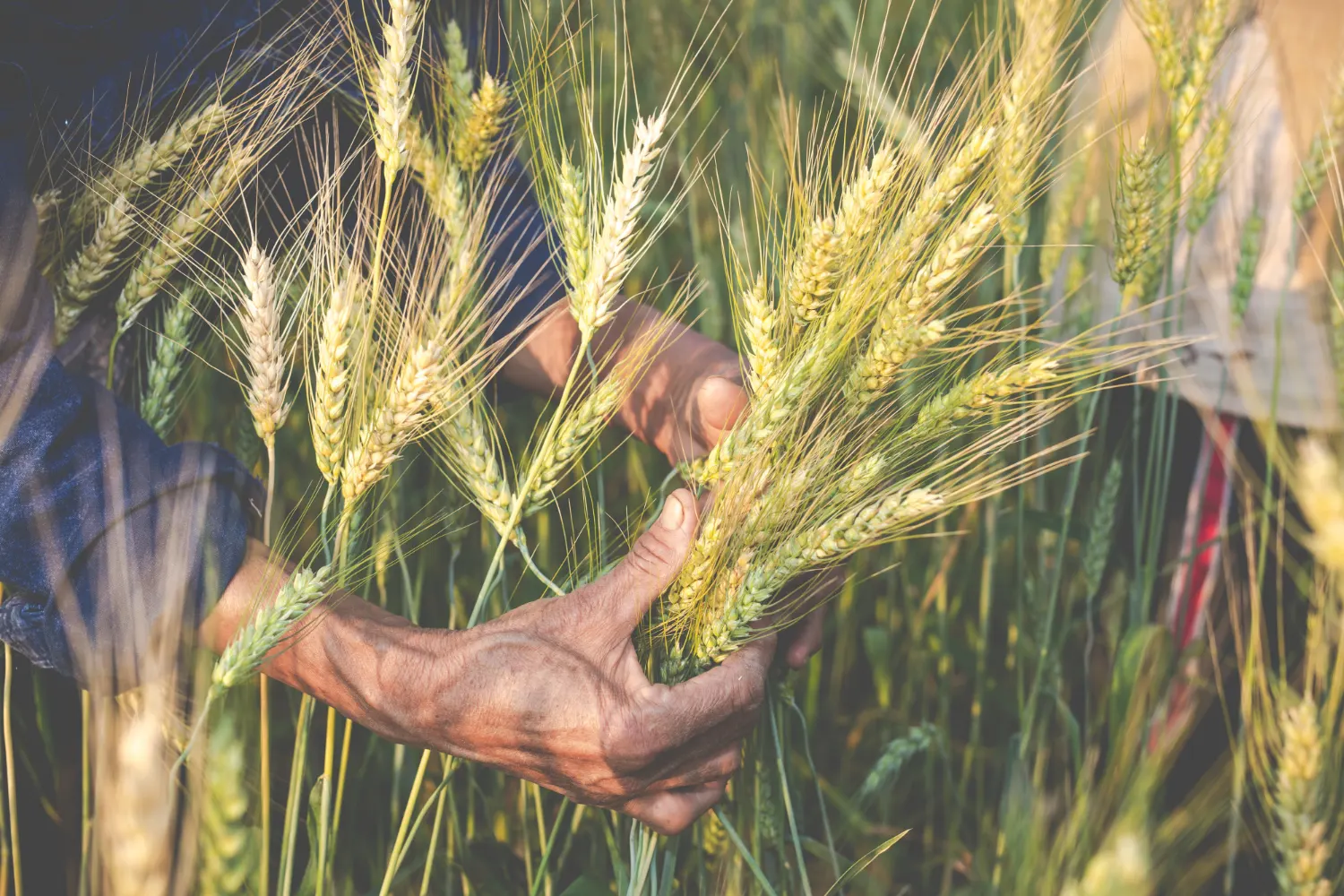
- Wheat plants turn golden yellow.
- Grains become hard and dry.
- Leaves start drying completely.
The crop can be harvested using sickles or modern harvesting machines depending on farm size.
Average Yield of Wheat
The yield of wheat depends on soil fertility, irrigation, variety, and farming practices. Under good management conditions, farmers can produce between 3 and 5 tons of wheat per hectare.
Conclusion
Wheat farming is an essential agricultural activity that supports food production and farmer livelihoods. With proper land preparation, timely sowing, balanced fertilization, efficient irrigation, and effective pest management, farmers can achieve high wheat yields.
Adopting modern farming techniques and improved wheat varieties can further enhance productivity and contribute to sustainable agricultural development.