


Warning: foreach() argument must be of type array|object, bool given in /home/u780765189/domains/akshayseed.com/public_html/wp-content/themes/akshayseed/single.php on line 8
Best Jeera Seeds Wholesale Price Trends in Gujarat 2026: Unjha Mandi Rates and Sowing Guide
Commercial Cumin Trading and Quality Benchmarks: The Complete 2026 Jeera Seeds Wholesale Price Guide
Trading cumin seeds requires deep market awareness and rigorous agronomic planning. Unjha Agricultural Produce Market Committee (APMC) in Mehsana district remains the primary price-discovery center for the spice world. Consequently, progressive farmers and spice merchants actively track the Jeera Seeds Wholesale Price 2026 to capitalize on fluctuating commodity spot markets.
Securing peak auction bids inside competitive commodity yards demands high seed purity. Many growers encounter heavy price deductions at the auction platform due to poor seed grading. Furthermore, high moisture content, small seed size, and fungal black spots significantly reduce lot valuations. Therefore, forward-thinking agricultural producers consistently invest in certified, true-to-type seed varieties rather than planting unverified commercial grains.
Established seed producers like Akshay Seeds eliminate these field risks systematically. Through dedicated research, the company supplies certified seed stock that delivers superior grain uniformity and high volatile essential oil content. As a result, growers achieve premium returns across leading wholesale terminal markets.4 Essential Requirements for High-Value Cumin Lots at the Mandi
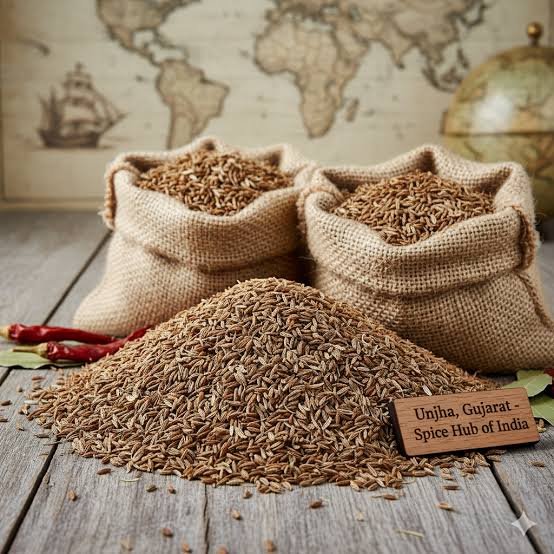
Bulk auction floor and wholesale cumin seed trading yard at Unjha APMC in Gujarat.
4 Essential Requirements for High-Value Cumin Lots at the Mandi
Commanding the highest price per quintal requires specific physical seed standards:
Strict Volatile Oil Retention: Oleoresin extractors prioritize lots containing over 2.5% volatile oil content. Specifically, cuminaldehyde compounds determine the aromatic potency of processed ground spices.
Moisture Thresholds for Cold Storage: Commercial warehouses enforce a strict moisture cap of 7.5% for long-term holding. Consequently, overly moist seeds face immediate price discounting to cover mechanical drying costs.
Thousand-Grain Weight and Seed Elongation: Bold, elongated seeds with pronounced ridges indicate complete starch accumulation. Furthermore, robust seedlings emerge more evenly when growers follow the best practices explained in our guide to seed germination.
Absence of Soil-Borne Fungal Blight: Lots showing discolored seed tips or powdery mildew damage are rejected for direct export. As a result, farmers must protect their root zones by implementing the strategies detailed in our guide on seed treatment benefits.
2026 Unjha Mandi Cumin Wholesale Price Tiers by Physical Quality
Wholesale lots entering Unjha are evaluated on physical purity, moisture percentage, and essential oil retention. Consequently, prices vary significantly across different export and domestic classifications:
| Quality Grade | Commercial Trade Classification | Physical Specification Parameters | Moisture Limit (%) | Price Range (INR / Quintal) | Average Price (INR / kg) |
| Grade A++ (Europe Clean) | Machine Cleaned Export Bold | 99.5% purity, zero foreign dust, uniform greenish-brown | Under 6.8% | Rs 28,500 – Rs 32,500 | Rs 285 – Rs 325 |
| Grade A (Singapore Quality) | Premium Commercial Clean | 99.0% purity, max 1% trace dust, bold seed elongation | Under 7.5% | Rs 24,000 – Rs 27,500 | Rs 240 – Rs 275 |
| Grade B (Domestic Bold) | Standard Mechanical Filtered | 98.0% purity, minor color variance, standard density | Under 8.5% | Rs 20,500 – Rs 23,500 | Rs 205 – Rs 235 |
| Grade C (Industrial Grade) | Ordinary Uncleaned Lot | 95.0% purity, higher broken seeds, dull brown tint | Under 9.5% | Rs 16,500 – Rs 19,500 | Rs 165 – Rs 195 |
Commercial buyers evaluate physical lots with strict moisture meters before submitting formal bids. Therefore, sourcing certified planting stock from the dedicated line of cumin seeds helps growers produce bold, heavy grains that consistently meet Grade A++ criteria.
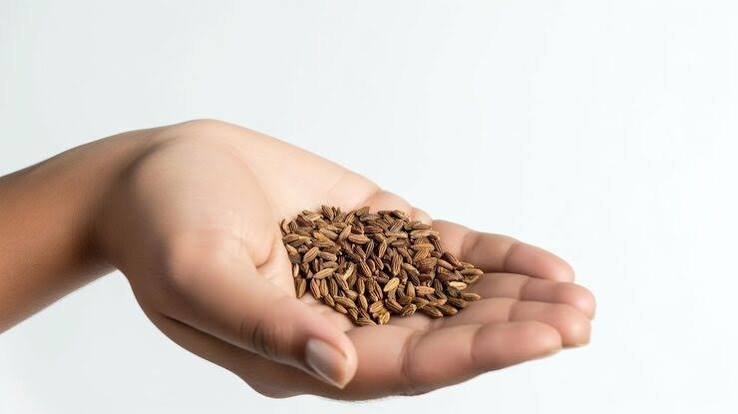
Bulk auction floor and wholesale cumin seed trading yard at Unjha APMC in Gujarat.
Field Economics: Certified Seed Varieties vs. Farm-Saved Grains
Investing in certified seed genetics generates measurable financial advantages at the terminal auction platform. The comparison below illustrates the cost and revenue dynamics across a single Vigha (0.4 acre) in Gujarat:
Seed Sowing Rate: Line sowing requires 3.5 kg to 4.5 kg of graded seed per Vigha.
Average Yield with Farm-Saved Grain: Traditional unselected farm grain produces 160 kg to 210 kg per Vigha.
Average Yield with Certified Seed Lines: Precision research seed delivers 280 kg to 360 kg per Vigha.
Auction Bid Variance: Premium bold cumin commands an extra premium of Rs 25 to Rs 45 per kg over uncleaned grains.
Financial Revenue Comparison (1 Vigha / 0.4 Acre):
- Research Seed Plot (320 kg x Rs 265/kg):   Rs 84,800 Gross Realization
- Farm-Saved Grain Plot (190 kg x Rs 205/kg): Rs 38,950 Gross Realization
Net Difference: +Rs 45,850 in favor of certified research seed stock.
Afterward, smart farm managers reinvest their harvest profits into expanding high-performing varieties. Using certified research stock like Cumin Seed (Akshay Atal) guarantees uniform vegetative vigor and high disease tolerance throughout the season.
Agronomic Protocols for Securing Grade A++ Mandi Prices
Achieving top wholesale rates requires precision management across each developmental phase of the crop:
1. Land Preparation and Soil Drainage
Cumin roots demand well-aerated, light sandy loam soils. Compact clay soils retain excess moisture, creating ideal conditions for destructive wilt infestations. Therefore, deep summer ploughing followed by two passes with a rotavator establishes a fine, friable seedbed.
2. Timely Sowing Window
Planting between November 1st and November 25th provides the optimal temperature window for vegetative development. Delaying sowing into December shortens the vegetative phase. Consequently, early spring heatwaves force premature grain drying, leading to light, shriveled kernels.
3. Precision Irrigation Schedule
Overwatering represents the single biggest operational hazard in cumin cultivation:
First Irrigation: Apply a light irrigation immediately after line sowing to settle the seedbed.
Second Irrigation: Apply a gentle watering 7 to 10 days later to soften the soil crust and support seedling emergence.
Third Irrigation: Irrigate at the branching stage, roughly 30 to 35 days post-sowing.
Final Irrigation: Provide a calibrated watering at early flowering (60 to 65 days).
Critical Threshold: Cease all irrigation once seed formation begins. Late flood watering triggers Alternaria blight and blackens maturing seed coats.

Healthy, disease-free cumin crop during peak flowering stage in North Gujarat.
Sustainable Multi-Crop Diversification Framework
Relying exclusively on cumin increases financial risk when local markets face price volatility or adverse weather. Experienced farm managers balance spice farming with high-margin oilseeds and pulses across seasonal cycles:
Kharif Soil Rejuvenation: Before planting winter cumin, cultivating nitrogen-fixing groundnut seeds restores soil structure and enriches residual nitrogen levels.
Drought-Resilient Kharif Grain: Planting climate-hardy bajra seeds breaks insect cycles while delivering high fodder yields for livestock.
Cold-Tolerant Alternative Cash Crops: In soil zones with marginal salinity, planting cold-hardy mustard seed provides dependable winter farm revenue.
Seasonal Strategy Execution: Developing a synchronized planting timeline is simple when following the principles outlined in our overview of season-wise crop planning.
4 Common Harvesting Mistakes That Slash Mandi Bids
Commission agents at Unjha deduct significant value from lots displaying physical defects. Avoid these common post-harvest handling mistakes:
1. Harvesting During Morning Dew Hours
Collecting wet plants causes fine soil particles to coat the damp seed husk. Consequently, this persistent grey film cannot be removed by air blowers, preventing the lot from reaching machine-clean grades.
2. Open Drying on Bare Earthen Floors
Drying unthreshed crop bundles directly on unpaved dirt yards introduces stones, sand, and organic debris into the bulk seed lot. Export processors reject consignments with high silica content. Therefore, always dry harvested cumin on clean plastic tarpaulins.
3. Packaging Warm Grains Immediately into Air-Tight Bags
Packing sun-warmed seeds directly into non-breathable plastic sacks creates internal condensation. As a result, trapped moisture triggers mold growth within days, darkening the grains and ruining their natural aroma.
4. Relying on Degenerated Local Farm Seed
Planting unselected seed grains results in uneven maturity and elevated susceptibility to vascular wilt. Sourcing verified seed stock directly from Akshay Seeds ensures high germination rates and uniform crop growth.
Frequently Asked Questions (FAQs)
What is the expected 2026 wholesale price for export-quality cumin in Unjha?
Export-grade machine-clean cumin (99.5% purity) trades between Rs 28,500 and Rs 32,500 per quintal (Rs 285 to Rs 325 per kg), depending on daily arrivals and overseas demand.
How much seed is required to sow one acre of cumin in Gujarat?
Line sowing using tractor-drawn seed drills requires 5 kg to 6 kg of graded seed per acre. In contrast, traditional broadcasting requires 8 kg to 10 kg per acre to compensate for uneven planting depth.
How does seed moisture affect wholesale price bids?
Moisture levels exceeding 8.5% make cumin unsuitable for long-term cold storage. Consequently, buyers discount bids by Rs 300 to Rs 700 per quintal to cover post-harvest redrying costs.
What causes black seed discoloration in maturing cumin crops?
Black seed discoloration (Kalo Chhanto) is primarily caused by unseasonal humidity, late overhead irrigation, or fungal blight infections during the grain-filling phase.
Secure Certified Foundation Seeds for the 2026 Season
Achieving top prices at the Unjha APMC auction floor begins long before harvest. It starts with selecting pure, certified seed stock. Investing in superior genetics protects your field investment, delivers uniform maturity, and yields the bold grains demanded by export buyers.
Optimize your commercial returns this season. Explore our complete portfolio across the Akshay Seeds products range, review real field trials in the Akshay Seeds gallery, or connect directly with our agronomy team through our contact us portal to secure your certified planting stock!
