Warning: foreach() argument must be of type array|object, bool given in /home/u780765189/domains/akshayseed.com/public_html/wp-content/themes/akshayseed/single.php on line 8
How to Apply for i-Khedut Seed Subsidy Online: Eligibility, Document Checklist and Certified Seeds Guide
Government Support for Quality Sowing: The Step-by-Step i-Khedut Seed Subsidy Online Registration Guide
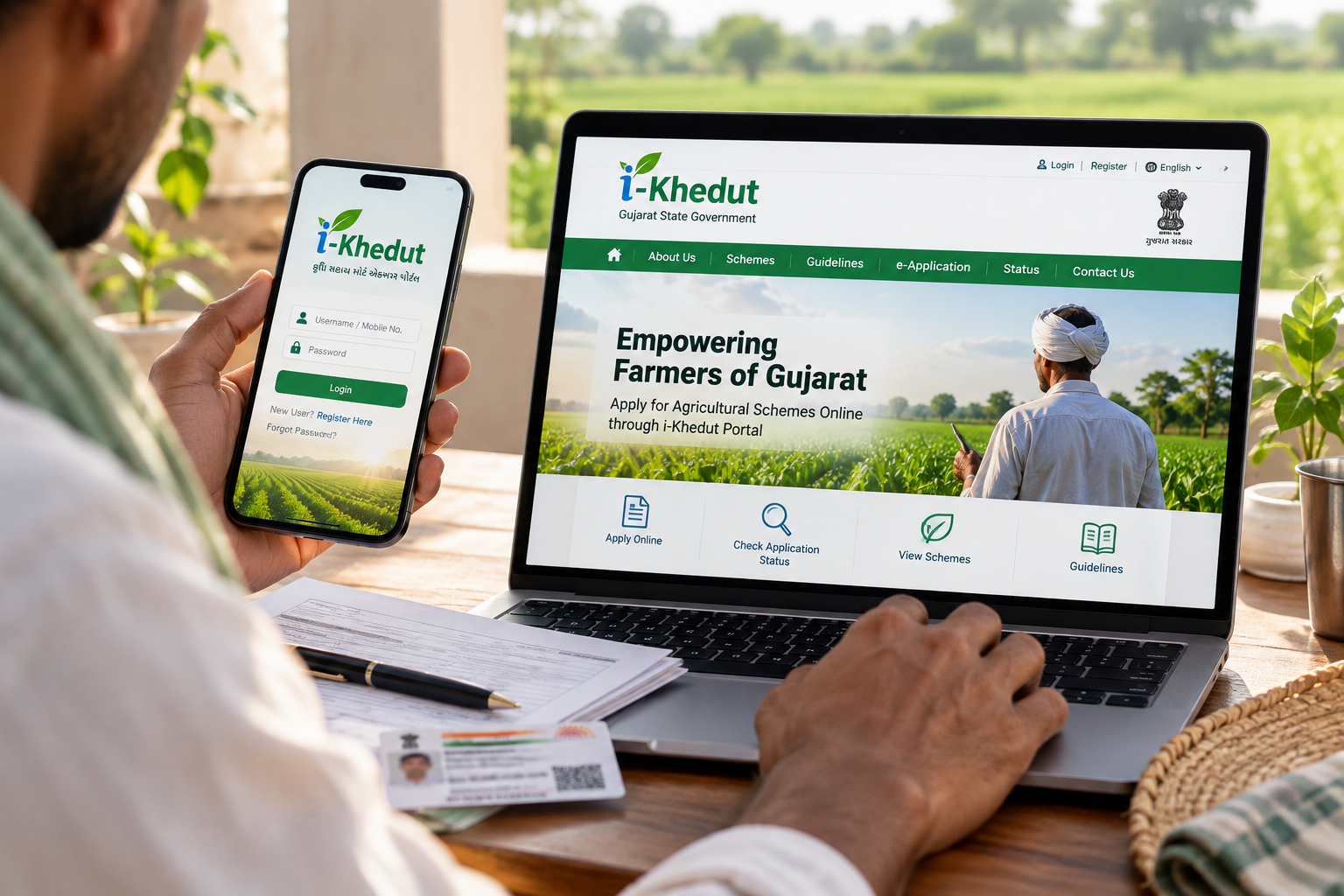
Reducing early production expenses is essential for running a profitable farm. Across Gujarat, modern farmers (kheduts) actively search for verified information about the i-Khedut Seed Subsidy to lower foundational input costs for seasonal plantings. Administered by the Department of Agriculture, Government of Gujarat, the portal provides financial assistance on certified and hybrid seed purchases across major Kharif, Rabi, and summer cash crops.
Securing official benefits demands clear knowledge of procedural timelines and submission requirements. Many farming families lose out on valuable state allocations simply due to late registrations, mismatched bank documentation, or purchasing from unauthorized vendors. Furthermore, funds are allocated on fixed seasonal quotas, requiring swift action as soon as the online submission window opens. Therefore, forward-thinking agricultural producers prepare their land records well in advance to ensure smooth application processing.
Trusted agricultural seed producers like Akshay Seeds actively support this initiative by providing verified, certified planting stock that complies with state seed standards. Sourcing high-vigor, lab-tested foundation stock protects field germination rates while ensuring your purchase qualifies for official subsidy redemption. As a result, farmers secure dependable returns on both government benefits and crop yields.
i-khedut-seed-subsidy-document-verification
Eligibility Criteria for the i-Khedut Portal Scheme
Qualifying for seed subsidy benefits requires meeting straightforward regulatory conditions set by the state agriculture department:
Land Title Ownership: The applicant must be a registered agricultural landowner in Gujarat possessing valid 7/12 and 8-A land records. Tenant cultivators require registered tenancy certificates recognized by local revenue authorities.
Aadhaar-Linked Bank Accounts: Payment disbursements are processed exclusively via Direct Benefit Transfer (DBT). Consequently, bank passbooks must show active Aadhaar linkage and correct IFSC codes to prevent failed payment transfers.
Farmer Category Preferences: While open to all landholders, the scheme provides enhanced subsidy margins for Small and Marginal Farmers (less than 2 hectares), Women Farmers, and SC/ST categories.
Authorized Dealer Invoicing: Cash vouchers from unverified local traders are automatically disqualified. Subsidies apply exclusively when purchasing from registered cooperative societies or government-approved distributors of certified lines like Wheat Seeds.
Mandatory Document Checklist for Fast Portal Approval
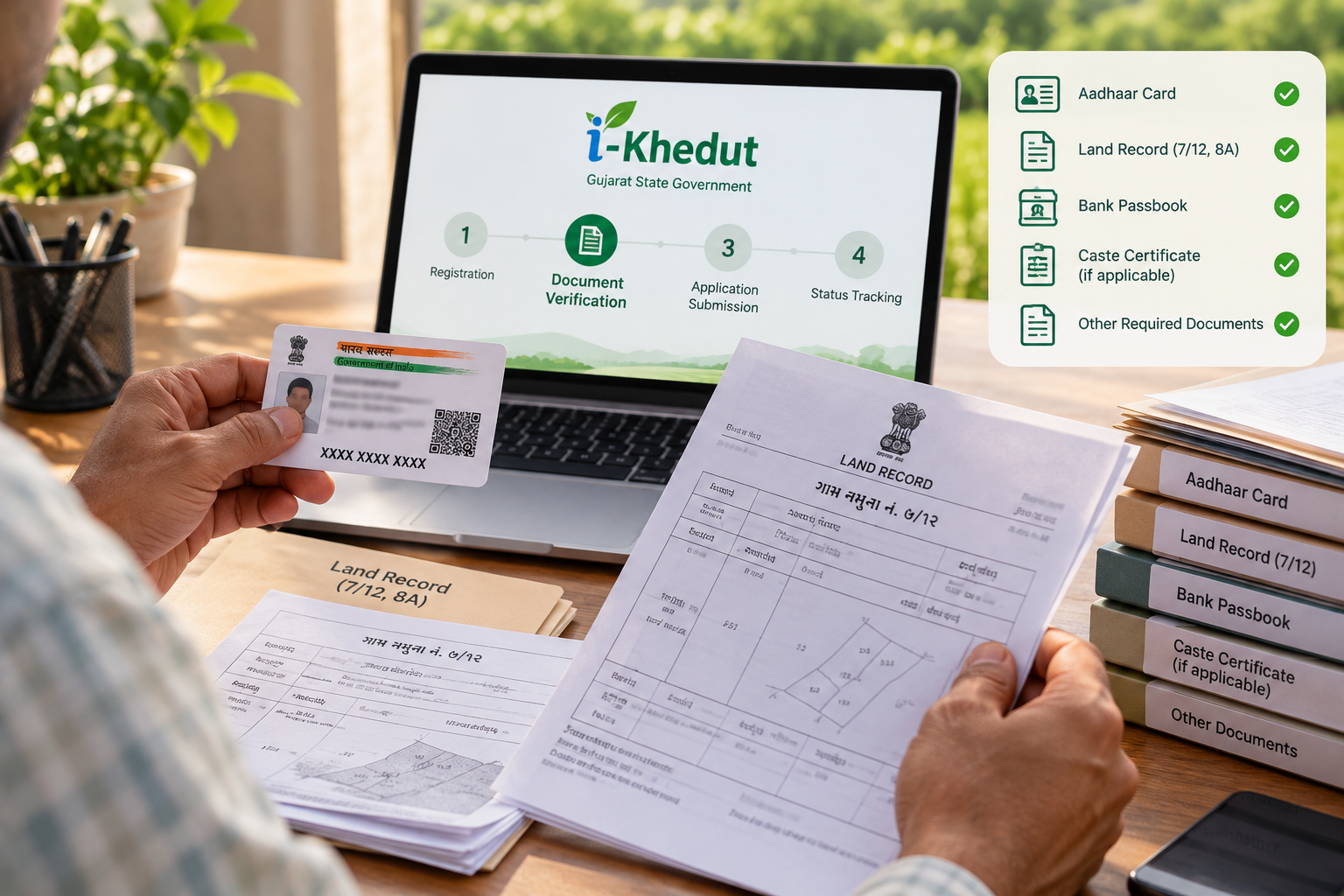
Preparing digital copies of essential certificates prevents session timeouts during the registration process:
Land Records (7/12 & 8-A Extracts): Recent digital copies downloaded via the AnyRoR Gujarat revenue portal.
Identity Verification: Clear scanned copy of the applicant’s original Aadhaar Card.
Bank Details: Front page copy of the nationalized bank passbook showing account number, name, and IFSC code.
Caste or Disability Certificate: Relevant state-issued certificates for farmers seeking specialized reservation subsidies.
Mobile Number Access: An active mobile phone linked to the Aadhaar card to receive validation OTP codes during submission.
Step-by-Step Online Application Workflow
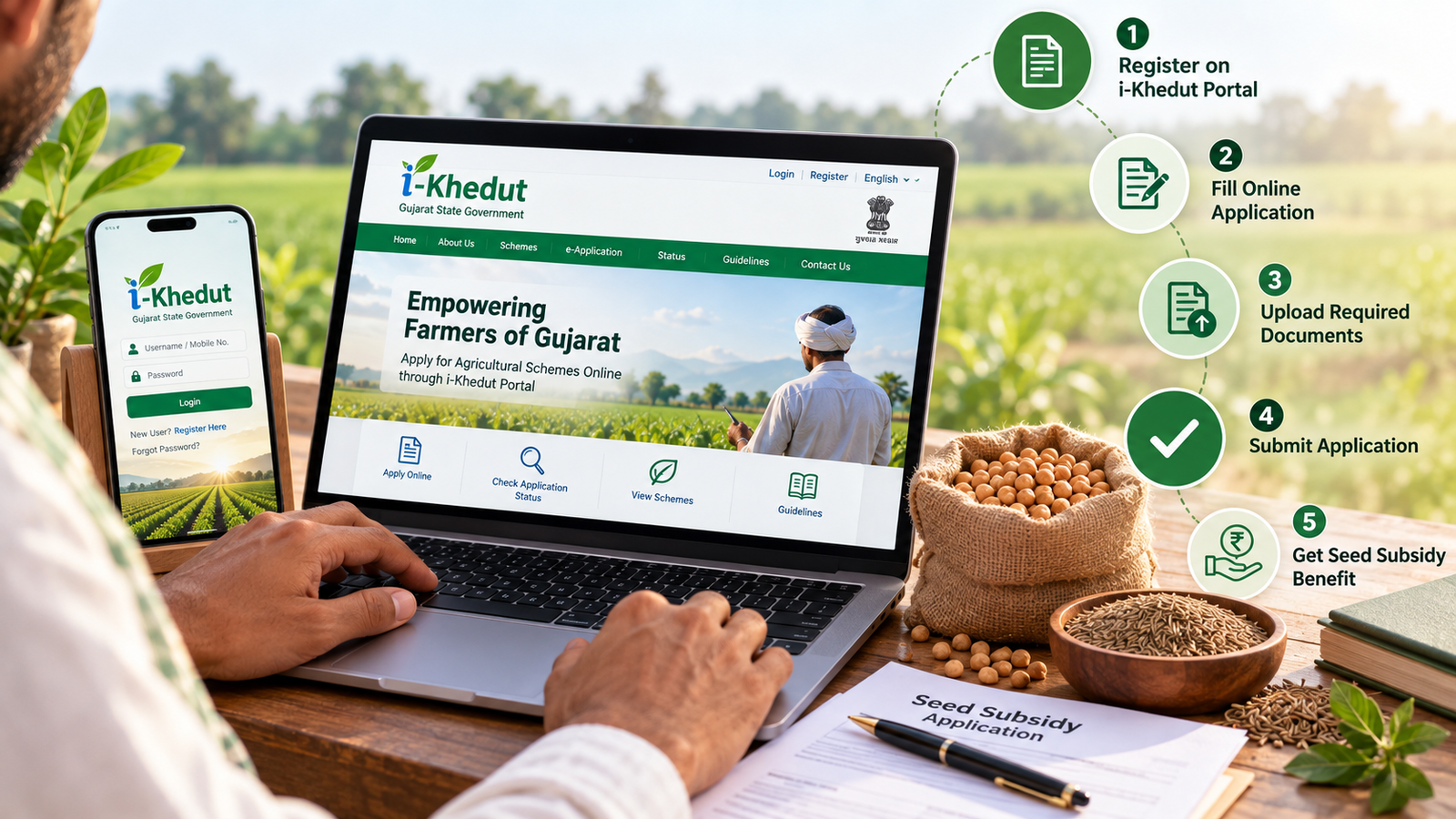
Submitting your application through the official i-Khedut web portal involves five simple milestones:
Step 1: Navigating to the Schemes Section
Access the official i-Khedut web portal and select the “Agriculture Schemes” (Kheti Ni Yojanao) tab from the main menu bar.
Step 2: Selecting Seed Component Subsidies
Choose the active seed subsidy scheme corresponding to your target planting season, whether you are seeking allocations for oilseeds, pulses, or winter grain crops.
Step 3: Entering Land and Personal Information
Input your 12-digit Aadhaar number, district, taluka, village, and specific land survey number. Confirm whether you are an existing registered user or a new applicant.
Step 4: Verification and Final Form Submission
Double-check all entered bank numbers and land details carefully. Enter the security captcha, click “Save Application,” and generate your unique application acknowledgment number.
Step 5: Document Submission to the Gram Panchayat
Print the generated acknowledgment receipt, sign it, and submit it along with physical document photocopies to your local Village Extension Officer (Gram Sevak) for field verification.
Village Extension Officer verifying 7/12 land records and certified seed purchase invoices.
Redeeming Subsidies with Certified Seeds vs. Uncertified Grains
Securing a subsidy on cheap, uncertified grain saves very little money when compared to the heavy losses caused by disease and poor yields. Review the economic comparison below:
High Germination Assurance: Certified seed lots must maintain minimum laboratory germination rates of 85% to 90%, preventing uneven field emergence. Review proper soil readiness strategies in our guide to seed germination.
Inherent Disease Tolerance: Government-approved certified seeds undergo strict quality checks that significantly reduce seed-borne pathogens. Learn how to protect your root zone further in our guide on seed treatment benefits.
Substantial Yield Performance: Research-grade crops routinely yield 25% to 40% higher harvest volumes compared to unselected local market grains.
Guaranteed Reimbursement Eligibility: Purchasing tested varieties like Mustard seed ensures your purchase invoice meets all criteria for direct government subsidy approval.
Seasonal Crop Planning for Multi-Crop Subsidies
The agriculture department opens distinct application windows across different seasons. Progressive farmers plan their allocations systematically throughout the year:
Kharif Season Allocations: Apply for certified pulse and oilseed varieties, including high-performing soyabean Seeds to maximize early monsoon soil fertility.
Rabi Season Cash Crops: Secure subsidies on winter staples and high-value spices, including approved lines of cumin seeds for superior returns at the Unjha APMC.
Summer Forage and Grain Security: Utilize summer portal windows to secure allocations for drought-resilient crops like bajra seeds.
Comprehensive Strategy: You can review planting calendars and variety selection across changing monsoon, winter, and summer cycles in our detailed resource on season-wise crop planning.
4 Common Mistakes That Lead to Portal Application Rejection
Avoid these frequent mistakes that cause state evaluators to reject subsidy applications:
1. Discrepancies Between Bank Accounts and Aadhaar Records
If the spelling of your name on your bank account differs from your Aadhaar card, the automated DBT system will reject the payment transfer. Always resolve account name mismatches prior to application.
2. Missing the Gram Sevak Submission Deadline
Generating an online application receipt is only the first step. Failing to submit physical paper copies to your local Village Extension Officer within seven days results in automatic cancellation.
3. Buying from Unapproved Private Traders
Purchasing seed lots from local unverified merchants who cannot issue authorized GST bills with certified lot numbers disqualifies your subsidy claim immediately.
4. Sowing Degenerated Farm Grains
Using uncertified seeds saved from previous crops prevents you from receiving financial assistance while exposing your field to disease. Sourcing verified seed stock directly from Akshay Seeds guarantees authentic billing, high germination, and complete compliance with government subsidy programs.
Frequently Asked Questions (FAQs)
What percentage of seed cost is covered under the i-Khedut Seed Subsidy?
The subsidy typically covers 40% to 50% of the certified seed cost for general category farmers, and up to 60% to 75% for small, marginal, women, and SC/ST farmers, subject to seasonal caps.
How are seed subsidy payments released to farmers in Gujarat?
Payments are deposited directly into the beneficiary’s Aadhaar-linked bank account through the Direct Benefit Transfer (DBT) system once the purchase bill and field verification are cleared.
Can a farmer apply for multiple crop seed subsidies in one season?
Yes, farmers holding sufficient land acreage can apply for multiple components across oilseeds, pulses, and cereals, provided they stay within specified per-hectare limits.
What should I do if my i-Khedut online application status shows pending?
Contact your local Village Extension Officer (Gram Sevak) or visit the Taluka Agriculture Office with your printed application number to confirm that physical document verification has been completed.
Build High Farm Yields with Certified Seeds
Maximizing farm profitability starts with reducing input expenses and planting certified, high-germination seed genetics. Combining state-backed subsidies with quality seed stock protects your working capital, strengthens disease resistance, and drives strong harvest yields.
Make the most of government support programs this season. Explore our verified seed varieties across the Akshay Seeds product catalogue, review verified field results inside the Akshay Seeds media gallery, or contact our advisory team directly via our contact us portal to secure your certified seed stock today!