

Warning: foreach() argument must be of type array|object, bool given in /home/u780765189/domains/akshayseed.com/public_html/wp-content/themes/akshayseed/single.php on line 8
Hybrid Seeds vs Traditional Seeds: Which Is Better for Farmers?
Introduction
Seed choice is the foundation of farming success. No matter how fertile the soil is or how good the rainfall turns out to be, the final yield largely depends on the type of seed planted.
For decades, Indian farmers have relied on traditional seeds, saved and shared across generations. In recent years, hybrid seeds have become increasingly popular due to their promise of higher yields and uniform crops.
This has led to a common and important question among farmers:
Hybrid seeds vs traditional seeds – which is actually better?
The answer is not simple or one-sided. Each type of seed has its own advantages, limitations, and ideal use cases.
What Are Traditional Seeds?
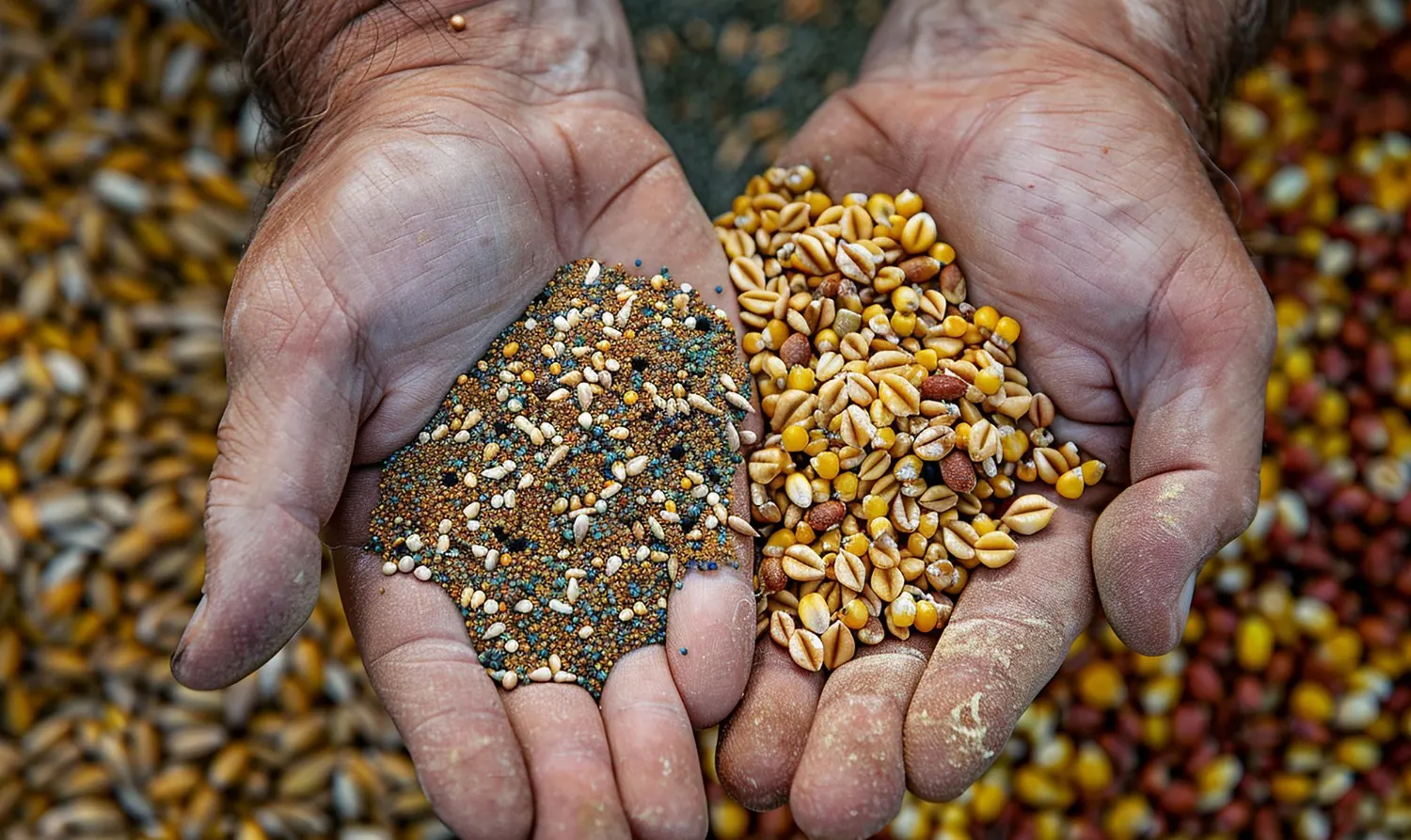
Traditional seeds, also known as desi seeds, indigenous seeds, or heirloom seeds, are seeds that have been cultivated and preserved by farmers for generations.
These seeds are open-pollinated, meaning they reproduce naturally and farmers can save seeds from their harvest for the next season.
Key Characteristics of Traditional Seeds
- Naturally evolved over decades or centuries
- Locally adapted to soil and climate
- Can be saved and reused every year
- Usually grown with low external inputs
- Greater genetic diversity
What Are Hybrid Seeds?
Hybrid seeds are produced by cross-pollinating two genetically different parent plants under controlled conditions.
Hybrid seeds are usually labeled as F1 hybrids and are developed by seed companies through scientific breeding programs.
Key Characteristics of Hybrid Seeds
- High yield potential
- Uniform crop growth and size
- Often resistant to specific pests or diseases
- Require fertilizers, irrigation, and management
- Seeds cannot be reused effectively
Yield Comparison: Which Produces More?
Hybrid Seeds and Yield
Hybrid seeds are designed for maximum productivity and can produce 20–50% higher yield than traditional seeds under ideal conditions.
Why Hybrids Yield More
- Faster growth
- Uniform flowering and maturity
- Efficient nutrient use
Conditions Required for High Hybrid Yield
- Fertilizers applied properly
- Sufficient irrigation
- Effective pest control
Traditional Seeds and Yield
Traditional seeds usually produce lower yields, but they are more stable across varying conditions.
- Survive droughts better
- Perform consistently year after year
- Fail less completely in bad seasons
Cost Factor: Which Is Economically Better?
Cost of Hybrid Seeds
- Purchased every season
- Higher cost of fertilizers
- More pesticide usage
- Greater irrigation expenses
- Higher crop protection cost
Cost of Traditional Seeds
- Saved from previous harvest
- Exchanged among farmers
- Free or very low cost
- Require fewer chemical inputs
Climate Resilience and Adaptability
Traditional Seeds: Naturally Resilient
- Adapted to irregular rainfall
- Survive poor soil conditions
- Resistant to local pests and diseases
Hybrid Seeds: Climate Sensitive
- Yield drops with rainfall failure
- Higher risk of crop failure
- Best suited for irrigated conditions
Seed Saving and Farmer Independence
Traditional Seeds Empower Farmers
- Seeds can be saved
- Replanted every year
- Reduced dependency on companies
Hybrid Seeds Create Dependency
- Saved seeds lose productivity
- Unpredictable crop traits
- Must be purchased every season
Impact on Soil Health and Sustainability
Traditional Seeds and Soil Health
- Suitable for organic farming
- Support natural fertilizers
- Maintain soil microbes
- Improve long-term fertility
Hybrid Seeds and Soil Stress
- Higher nutrient extraction
- Heavy fertilizer dependency
- Reduced soil biodiversity
Suitability Based on Farmer Type
Hybrid Seeds Are Better If You Are
- A commercial farmer
- Have assured irrigation
- Can invest in inputs
- Targeting high market yield
Traditional Seeds Are Better If You Are
- A small or marginal farmer
- Farming in rain-fed areas
- Practicing organic farming
- Focused on sustainability
Hybrid + Traditional: A Balanced Approach
- Use hybrid seeds for cash crops
- Use traditional seeds for food crops
- Preserve local seed varieties
- Reduce climatic and financial risk
Final Verdict: Which Is Better for Farmers?
- Hybrid seeds offer high yields under ideal conditions
- Traditional seeds offer resilience and independence
Conclusion
The debate between hybrid and traditional seeds is about balance, not right or wrong.
Using hybrids wisely while preserving traditional seeds ensures food security, farmer independence, and environmental sustainability.