Warning: foreach() argument must be of type array|object, bool given in /home/u780765189/domains/akshayseed.com/public_html/wp-content/themes/akshayseed/single.php on line 8
How to Start an Agri-Input Seed Dealership in Gujarat: License, Capital & Profit Margin Breakdown
Starting an agricultural input enterprise is one of the most resilient business ventures in Western India. Across Saurashtra, North Gujarat, and Central belts, dynamic rural entrepreneurs actively evaluate a Seed Dealership in Gujarat to build sustainable commercial operations. High agricultural production, rising adoption of certified hybrid seeds, and expanding irrigation networks have transformed quality seed distribution into a high-margin enterprise.
Succeeding in the agri-input trade requires strict regulatory compliance alongside disciplined inventory planning. Many aspiring retail distributors face early administrative hurdles by failing to submit accurate trade forms or underestimating seasonal working capital cycles. Furthermore, storing perishable seeds in poorly aerated rural godowns risks declining germination rates before sowing dates arrive. Therefore, forward-thinking business owners study statutory licensing frameworks and distributor margin dynamics thoroughly prior to commercial rollout.
Leading seed breeding organizations like Akshay Seeds actively support emerging distributors through direct partnership networks. Sourcing high-vigor, certified research seed lots ensures high regional brand recall among local growers. Consequently, retail stockists avoid customer retention issues while securing dependable seasonal inventory turnover.

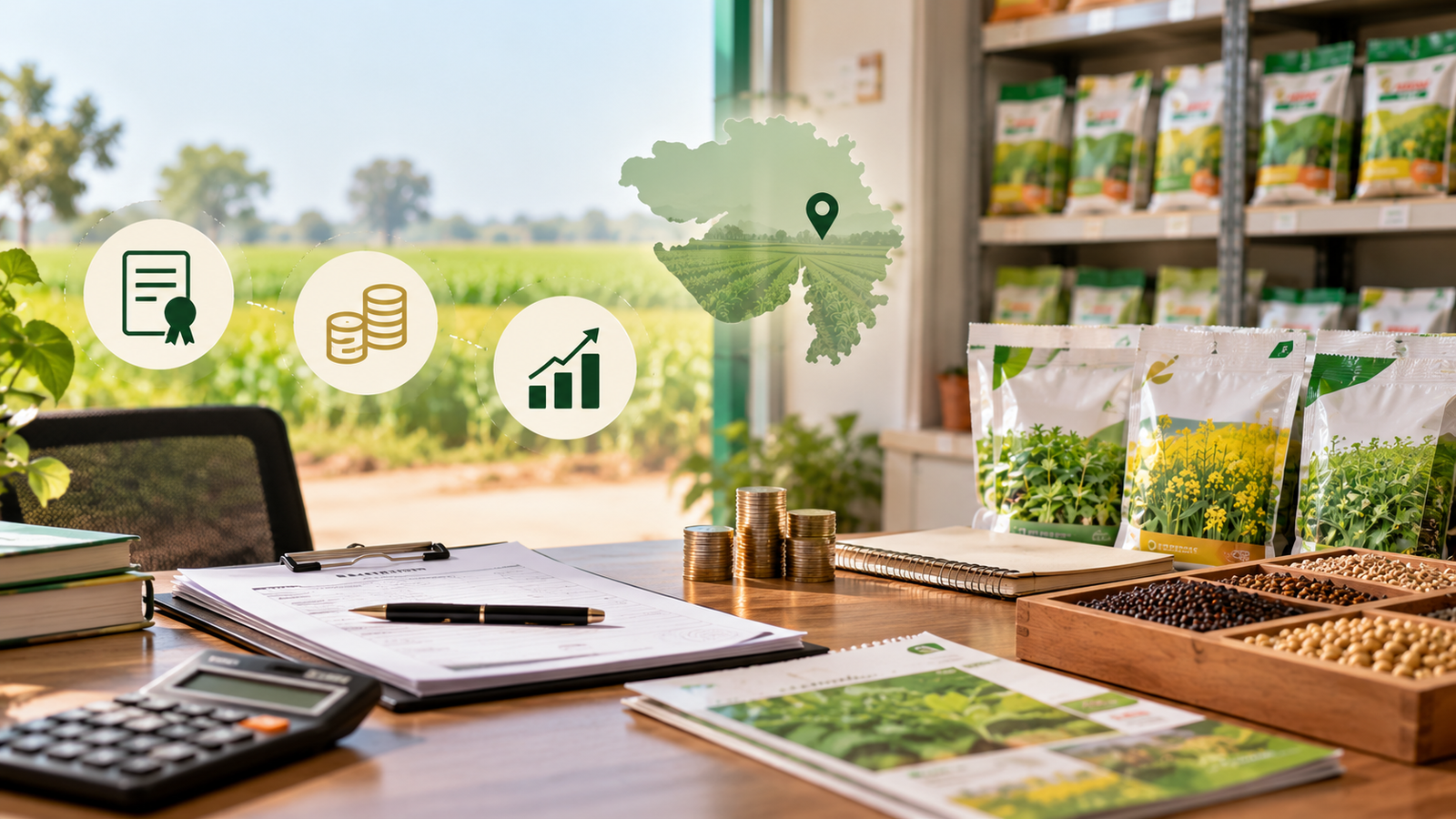
Authorized agricultural seed and input retail counter serving farmers in Gujarat.
Legal Framework: Seeds (Control) Order 1983 & Form A Licensing
Selling agricultural seeds in Gujarat requires mandatory licensing from the Directorate of Agriculture, Government of Gujarat:
Statutory Compliance Mandate: Under the Seeds Act 1966 and Seeds (Control) Order 1983, no commercial entity can stock, retail, or wholesale seed lots without a valid seed dealer license.
Application in Form A: Applicants must submit their primary business credentials using prescribed Form A documentation addressed to the District Agriculture Officer (DAO).
Principal Certificate of Source (Form O / Endorsement): The applicant must submit a valid Letter of Authorization (Principal Certificate) issued by certified seed producers confirming approved supply lines.
Premises Specification: The application must specify exact commercial premises for customer sales alongside verified godown locations used for bulk bag storage.
Mandatory Documentation Checklist for DAO Approval
Submitting a complete file to the District Agriculture Office expedites physical site verification and license issuance:
Identity and Residence Records: Self-attested copies of the proprietor or partners’ Aadhaar Card, PAN Card, and passport-size photographs.
Proof of Commercial Premises: Registered rent agreement or ownership document for both the retail counter and storage warehouse.
Municipal Trade License & GST: Valid shop establishment certificate (Gumastadhara) alongside an active GST registration certificate.
Non-Judicial Affidavit: Notarized affidavit stating that the firm has never faced convictions under the Essential Commodities Act.
Government Treasury Challan: Proof of statutory treasury fee payment for new seed license registration.
Capital Requirement & Setup Cost Breakdown
Launching an independent seed retail counter requires allocating capital across statutory, operational, and inventory heads:
Statutory Licensing & Legal Fees: Form A application fees, notary affidavits, and registration charges (Rs 5,000 to Rs 10,000).
Retail Shop Interior & Display Racks: Display shelves, billing computer, barcode reader, and electronic weighing equipment (Rs 60,000 to Rs 1,00,000).
Storage Warehouse Setup: Moisture-proof pallets, ventilation fans, and pest-barrier netting to safeguard seed viability (Rs 40,000 to Rs 75,000).
Initial Working Capital (Pre-Season Inventory): Upfront purchases of high-demand hybrid seed bags across pulses, cereals, and spices (Rs 2,50,000 to Rs 5,00,000).
Total Estimated Initial Investment: A functional taluka-level seed counter typically requires Rs 3,55,000 to Rs 6,85,000 in total initial capital.
Retail and Wholesale Profit Margin Dynamics
Agri-input seed distribution operates on tiered profit structures governed by genetic purity and market demand:
High-Volume Field Crop Grains: Commodity lines like certified Wheat Seeds deliver gross retail margins of 6% to 10%, generating steady seasonal cash flow through massive truckload volume.
Commercial Oilseeds & Pulses: Foundation seed stocks for crops like Groundnut Seeds generate healthy retail margins of 10% to 15%.
High-Value Research Spices: Proprietary spice lines like cumin seeds command lucrative retail margins of 15% to 22%.
Pre-Season Cash Discounts: Producers often grant an additional 3% to 5% early-booking discount to dealers who settle invoices before peak seasonal dispatches.
Inventory Selection: Balancing High-Volume Staples with High-Margin Hybrids
Successful dealers build resilient businesses by matching stock holding with regional cropping patterns:
Monsoon Foundation Stock: Stocking fast-germinating pulses like Green Gram Seed captures early Kharif rain demand.
Drought-Resilient Staples: Holding diverse maturity classes of bajra seeds ensures steady sales across semi-arid talukas.
Winter Cash Spices: Supplying proven lines like Hybrid Fennel Seeds (Akshay – 555) generates substantial profit during late August and September planting windows.
Winter Oilseeds: Stocking climate-resilient mustard seed secures turnover across saline agricultural tracts.
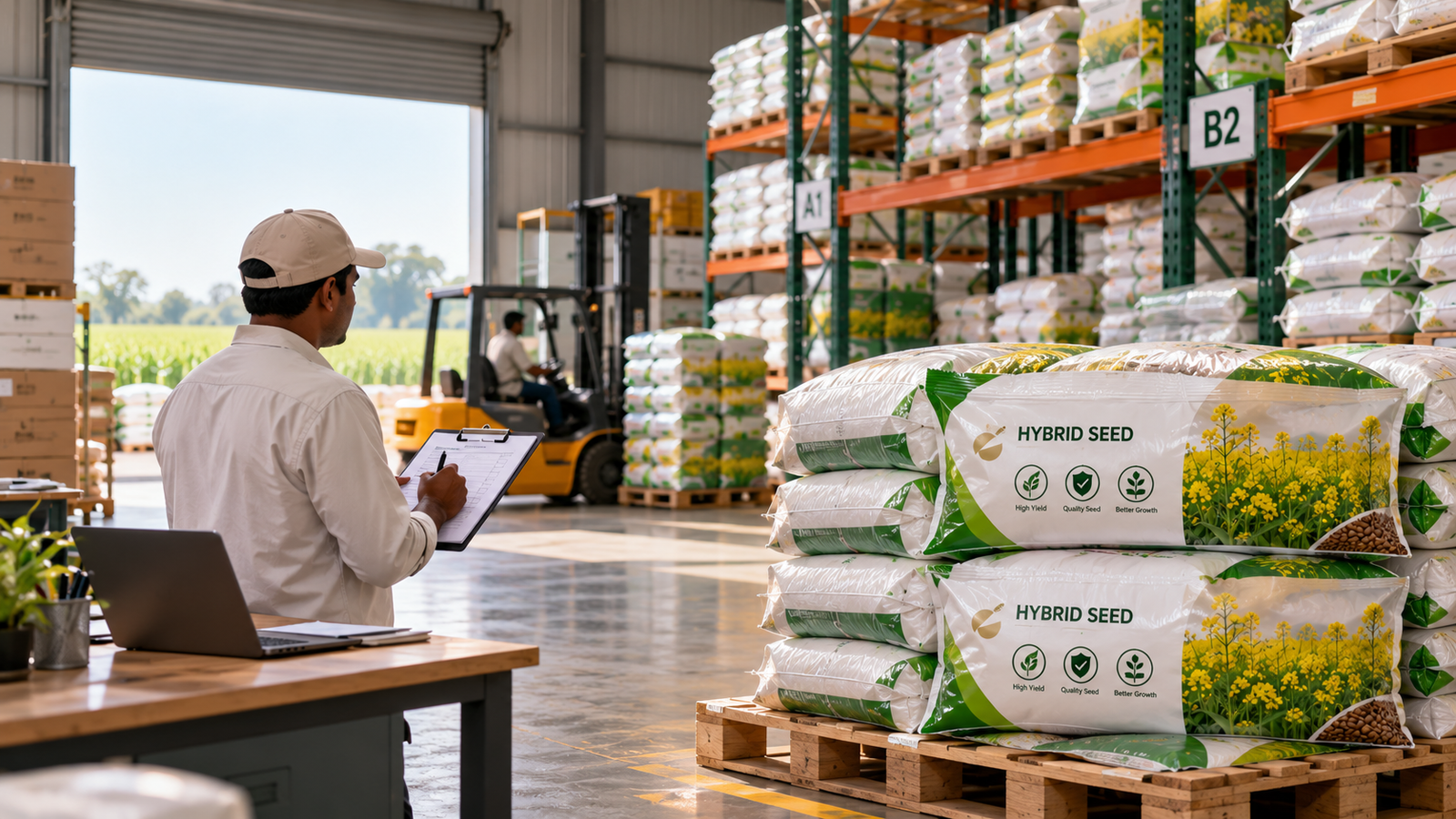
Organized warehouse storage of certified seed bags ready for rural dealer distribution.
Strategic Crop Rotation Planning for Multi-Season Revenue
Dealerships that focus exclusively on a single crop face prolonged dry spells in cash flow between planting seasons:
Kharif Season Inflows (June – August): Fast-moving turnover driven by cotton, groundnut, pulses, and fodder bajra.
Rabi Season Inflows (September – November): Peak revenue generated by cumin, fennel, wheat, chickpea, and mustard seed sales.
Summer Sowing Waves (January – March): Sustained retail sales of multi-cut fodder crops and vegetable hybrids.
Annualized Rotation Guidance: Dealers can master seasonal customer demand patterns by reviewing our comprehensive guide on season-wise crop planning.
4 Operational Pitfalls Every New Seed Dealer Must Avoid
Maintaining commercial profitability requires avoiding common regulatory and operational mistakes:
Improper Seed Storage Leading to Moisture Spoilage: Stacking seed bags directly on damp concrete floors causes seeds to absorb moisture, reducing germination rates. Always store bags on raised wooden or plastic pallets. Review foundational seed viability principles in our guide to seed germination.
Selling Expired Seed Lots: Retailing seed lots past their certified validity date violates the Seeds Act and invites immediate stock seizure.
Skipping Seed Treatment Up-Selling: Failing to educate purchasing farmers on pre-sowing seed protection sacrifices easy accessory revenue. Encourage every buyer to implement the protocols outlined in our review of seed treatment benefits.
Partnering with Unregistered Suppliers: Sourcing non-notified, unbranded seeds from grey-market brokers leaves your dealership legally liable for crop failure claims. Partnering directly with reputable, certified institutions like Akshay Seeds guarantees verified germination, official bills, and long-term farmer trust.
Frequently Asked Questions (FAQs)
What is the validity period of a seed license issued in Gujarat?
Under the Seeds (Control) Order 1983, a commercial seed dealer license remains valid for three years from the date of issue, after which it must be renewed using Form C.
Can a seed dealer also sell fertilizers and pesticides on the same premises?
Yes, but fertilizers and insecticides require separate statutory licenses governed under the Fertilizer (Control) Order and Insecticides Act.
What is the average net profit margin for an agri-input seed retailer?
After factoring in shop rent, staff wages, electricity, and freight, an established seed retailer earns an average net profit margin of 8% to 14% on total annual turnover.
How much physical space is required to start a seed dealership?
A standard dealership requires a minimum retail counter space of 150 to 200 square feet, paired with a clean, dry storage godown of at least 400 to 600 square feet.
Build a Thriving Agri-Input Dealership This Season
Building a successful agri-input dealership requires verified product performance, trusted seed genetics, and dependable supply chains. Sourcing certified hybrid lines gives your business high farmer loyalty, rapid inventory turnover, and profitable sales margins across every planting season.
Expand your commercial product portfolio this season. Browse our certified varieties in the Akshay Seeds product directory, view real-world field results inside the Akshay Seeds gallery, or submit your business distributor application through our contact us portal to secure your authorized dealership territory today!