Warning: foreach() argument must be of type array|object, bool given in /home/u780765189/domains/akshayseed.com/public_html/wp-content/themes/akshayseed/single.php on line 8
Variyali Farming Profit Per Acre: Best Fennel Seeds in Gujarat and Cultivation Economics
Cultivating high-value spice crops requires detailed cash-flow planning and certified planting material. Across North Gujarat and Saurashtra, progressive growers actively calculate Variyali Farming Profit Per Acre before committing seasonal land. Fennel (Foeniculum vulgare), locally celebrated as variyali or saunf, delivers strong per-hectare profit margins when managed with export-grade agronomy.
Securing Grade-A green kernels demands strict attention to harvest timing and nursery health. Many agricultural producers face reduced profits at local APMC mandis due to poor seed uniformity, weather scorching, and faded grain coloration. Furthermore, weak seed genetics cause loose, scattered umbels that shatter easily during windy harvest weeks. Therefore, ambitious commercial growers invest exclusively in tested hybrid planting stock rather than unselected open-pollinated grains.
Established agricultural enterprises like Akshay Seeds solve these yield barriers directly. Through advanced research, the company provides certified seeds engineered for high essential oil concentration, thick branching, and vibrant green color retention. Consequently, local growers capture higher auction premiums across leading spice markets.
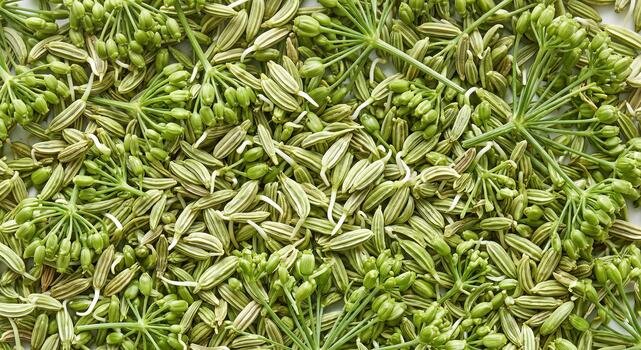
High-yield hybrid fennel crop during peak flowering and umbel development in Gujarat.
4 Primary Factors Governing Variyali Profitability in Gujarat
Commercial spice aggregators determine final lot values based on physical and aromatic parameters:
Lush Green Color Retention: Export brokers at Unjha and Rajkot pay top bids for vibrant pale-green seeds. Specifically, sun-bleached or yellowish seeds indicate delayed harvesting and sell at lower rates.
Thousand-Grain Weight and Umbel Density: Dense, compact umbels packed with bold, elongated kernels directly enhance harvest tonnage per bigha. Furthermore, uniform emergence is achieved when growers implement the foundational practices outlined in our guide to seed germination.
High Anethole Volatile Oil Content: Pharmaceutical extractors, distillers, and mouth-freshener manufacturers prioritize fennel containing over 1.8% volatile oil. Selecting certified research stock like Hybrid Fennel Seeds (Akshay – 555) guarantees high essential oil synthesis throughout maturity.
Early Disease Resistance: Damping-off during the nursery phase and powdery mildew during flowering slash harvest yields. As a result, farmers protect seedlings early by applying the protective protocols explained in our review of seed treatment benefits.
Per-Acre Cost of Cultivation and Net Income Analysis
Calculating operational expenses against realized market rates reveals why variyali remains one of Gujarat’s most lucrative cash crops.
Breakdown of Production Expenses (Per Acre / 2.5 Vigha):
Land Preparation: 1 deep disc ploughing + 2 rotavator passes (Rs 4,500 – Rs 5,500)
Hybrid Seed Input: 1.0 kg to 1.5 kg certified transplanting stock (Rs 2,500 – Rs 3,500)
Nursery Raising & Labor: Raised-bed management, weed protection (Rs 3,000 – Rs 4,000)
Transplanting Field Labor: Manual planting at 4 x 2 feet spacing (Rs 4,000 – Rs 5,000)
Fertilizer & Nutrition: Farm Yard Manure, DAP, Potash & Urea splits (Rs 6,500 – Rs 8,000)
Irrigation & Electricity: Drip maintenance and power (Rs 3,500 – Rs 4,500)
Intercultural Weeding: Two manual passes (Rs 3,500 – Rs 4,500)
Crop Protection: Sulfur dusting and bio-fungicides (Rs 4,500 – Rs 5,500)
Selective Staggered Harvesting: 3 to 4 picking rounds (Rs 8,000 – Rs 10,000)
Drying & Packaging: Shade drying on clean sheets (Rs 4,000 – Rs 5,000)
Total Production Cost Per Acre: Rs 44,000 to Rs 55,500
Income & Net Profit Realization:
Average Yield with Hybrid Seed: 1,200 kg to 1,500 kg per Acre (12 to 15 Quintals)
Conservative APMC Mandi Auction Price: Rs 140 to Rs 190 per kg
Gross Revenue (1,350 kg average @ Rs 165/kg): Rs 2,22,750
Net Profit Per Acre (Gross Revenue minus Expenses): Rs 1,67,250 to Rs 1,78,750
Commercial growers using premium seed lines consistently achieve net profits exceeding Rs 1,70,000 per acre over a single 160-day growing cycle.
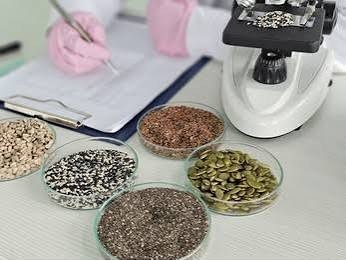
Plump, machine-cleaned green fennel seeds inspected for export purity standards.
Direct Sowing vs. Nursery Transplantation
Field data across Gujarat highlights clear yield differences between traditional direct broadcasting and precision seedling transplantation:
1. Direct Field Sowing
Seed Requirement: 3.5 kg to 4.5 kg per acre
Plant Spacing: Irregular, causing competition for sunlight and nutrients
Weed Control: Difficult and labor-intensive
Average Output: 800 kg to 950 kg per acre (predominantly domestic Grade B quality)
2. Nursery Transplantation (Recommended Method)
Seed Requirement: Only 1.0 kg to 1.2 kg per acre
Plant Spacing: Uniform 4 x 2 feet grid allowing full branching
Root Health: Superior root collar development and disease resistance
Average Output: 1,250 kg to 1,500 kg per acre (export-grade green kernels)
Transplanting 45-day-old seedlings into well-drained furrows allows each plant to branch profusely, forming 35 to 55 functional umbels per plant.
Seasonal Crop Rotation Strategy for Long-Term Soil Health
Fennel is a long-duration crop that occupies fields from July/August through February/March. Commercial farm managers incorporate variyali into calculated crop rotations to balance soil biology and secure multi-season liquidity:
Early Monsoon Preceding Crops: Before transplanting winter fennel in late August, growers can cultivate short-duration pulses like green gram seed to fix atmospheric nitrogen and enrich soil organic balance.
Parallel Winter Acreage: In fields with higher electrical conductivity (salinity), allocating adjacent acreage to resilient Mustard seed stabilizes seasonal farm income against microclimate shifts.
Spring-Summer Follow-Up Planting: Once fennel harvesting concludes in March, transitioning soil into drought-tolerant bajra seeds optimizes high-heat water usage while producing high-protein green fodder.
Year-Round Planning Integration: Aligning seed selection across changing monsoon, winter, and summer cycles is simple using our comprehensive guide on season-wise crop planning.
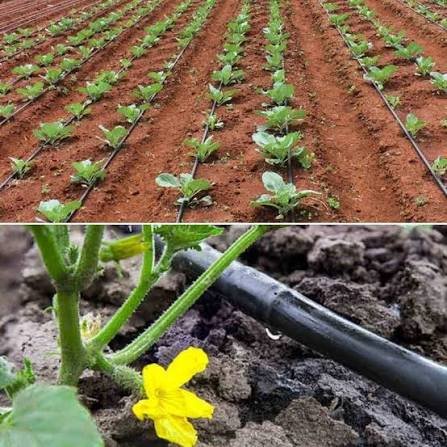
Precision drip irrigation lateral lines laid across transplanted fennel rows to optimize water efficiency.
4 Costly Mistakes That Reduce Variyali Market Realization
Spice buyers at Unjha enforce strict deductions for compromised lots. Avoid these four common operational missteps:
1. Delaying Harvest Until Seeds Turn Brown on the Plant
Leaving umbels on the stalk until they dry completely in the sun bleaches the seed husk to a pale yellow-brown. Mandi buyers discount sun-bleached lots by Rs 25 to Rs 45 per kg compared to vibrant green picked seeds. Therefore, harvest umbels selectively when seeds turn plump and light green, but before the stalks turn brittle.
2. Drying Harvested Umbels Under Direct Scorch Sunlight
Drying harvested umbels on concrete platforms under intense midday sun burns off essential volatile oils and destroys green chlorophyll pigmentation. Always dry clipped umbels under semi-shaded, well-ventilated drying sheds or beneath breathable shade nets.
3. Over-Fertilizing with Nitrogen During Umbel Formation
Excessive urea applications after November trigger lush vegetative leaf growth at the expense of floral development. Furthermore, soft, watery stems invite heavy aphid infestations and increase susceptibility to stem rot. Balance nitrogen with adequate phosphorus and sulfate of potash.
4. Planting Degenerated Local Market Grains
Sowing grain from ordinary spice bags leads to genetic segregation, uneven maturity, small seed length, and high rates of hollow grains. Sourcing verified certified varieties from agricultural producers like Akshay Seeds ensures genetic purity, uniform flowering, and top-tier market bidding.
Frequently Asked Questions (FAQs)
What is the average variyali farming profit per acre in Gujarat?
Under precision drip management and hybrid seed selection, growers achieve an average net profit of Rs 1,50,000 to Rs 1,85,000 per acre, factoring in total production costs of Rs 45,000 to Rs 55,000.
When is the ideal time to sow fennel seeds in Gujarat?
Nursery seedbeds should be sown between late June and mid-July. Seedlings are then transplanted into the main field between mid-August and early September for optimal vegetative expansion.
How much fennel seed is required to transplant one acre?
Raising a nursery for one acre of transplanted fennel requires only 1.0 kg to 1.2 kg of graded hybrid seed, compared to 4.0 kg to 5.0 kg required for direct broadcasting.
How many times are fennel umbels harvested from a single crop?
Fennel matures unevenly across secondary and tertiary branches. Consequently, high-yield fields require 3 to 4 selective hand-picking rounds spaced 10 to 12 days apart to gather each umbel at peak green maturity.
Maximize Your Commercial Fennel Harvest This Season
Achieving top prices at regional spice auctions begins with selecting clean, certified hybrid seeds. High-performance seed genetics deliver vigorous branching, plump green umbels, and the high essential oil content demanded by export aggregators.
Maximize your agricultural profits this season. Explore our complete seed portfolio across the Akshay Seeds product directory, view real-world field trial documentation inside the Akshay Seeds gallery, or connect directly with our agronomy distribution team through our contact us portal to place your commercial seed orders!