Warning: foreach() argument must be of type array|object, bool given in /home/u780765189/domains/akshayseed.com/public_html/wp-content/themes/akshayseed/single.php on line 8
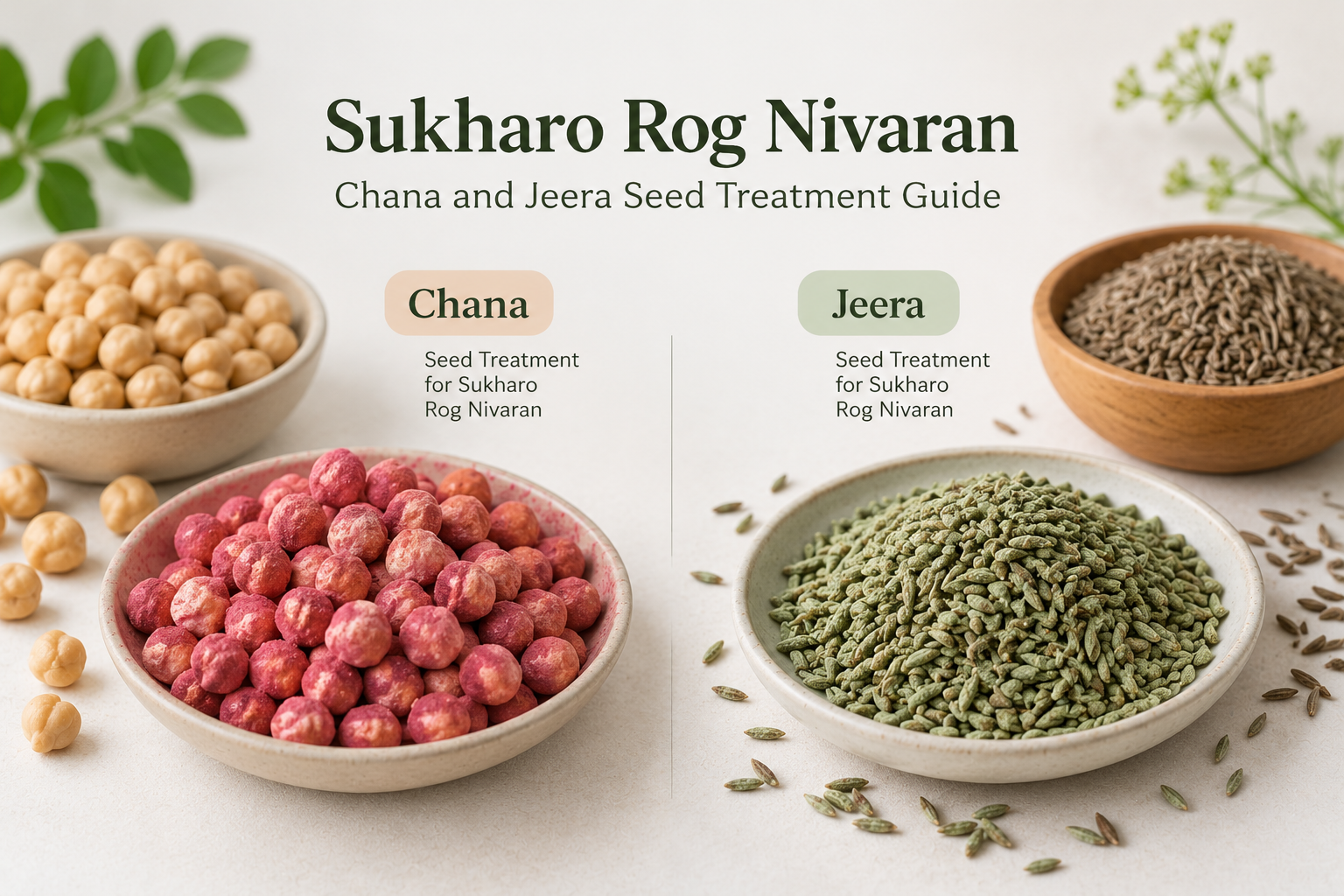
How to Control Sukharo Rog in Chana and Jeera: Complete Seed Treatment and Prevention Guide
Stopping Vascular Wilt at the Root: The Comprehensive Sukharo Rog Nivaran Guide for Chana and Jeera Farmers
Vascular wilt, universally recognized across Gujarat and Rajasthan as Sukharo Rog, represents the single most devastating biological threat to winter pulse and spice crops. Chickpea (Cicer arietinum) and cumin (Cuminum cyminum) growers frequently witness entire fields collapse within a 72-hour window. Consequently, implementing a proactive Sukharo Rog Nivaran strategy prior to sowing is the only guaranteed safeguard against catastrophic harvest losses.
Combating soil-borne pathogens post-germination is practically impossible. Once fungal mycelium enters root vascular bundles, upward sap flow chokes completely, rendering foliar sprays completely useless. Furthermore, high winter temperatures during early vegetative growth accelerate fungal proliferation inside damp soils. Therefore, progressive growers prioritize pre-sowing chemical and biological seed dressing to establish an impenetrable protective perimeter around emerging seedlings.
Agricultural research leaders like Akshay Seeds develop certified seed lines bred with enhanced vascular resistance. Sourcing high-vigor, lab-tested foundation stock significantly lowers fungal susceptibility right from germination. As a result, farmers avoid costly emergency treatments while securing maximum plant stand density.
Field inspection of early vascular wilt symptoms causing drooping in winter crops.
Identifying Sukharo Symptoms: Early Detection Diagnostics
Accurately diagnosing wilt during early field inspections prevents misidentifying fungal infection with ordinary water stress or root borer damage:
Sudden Canopy Droop: Initially, infected cumin and chickpea plants exhibit daytime drooping on upper leaf tips while surrounding plants stay fully upright.
Lower Leaf Chlorosis: Older leaves turn dull yellow-grey and curl inward, losing structural firmness without physical pest bites.
Collar Browning & Internal Vascular Discoloration: Splitting the root collar longitudinally reveals dark brown or purplish fungal streaking inside the central xylem tissue.
Rapid Irreversible Desiccation: Within three to four days of initial wilt symptoms, the entire root network rots completely, turning brittle and snapping easily when pulled.
Recognizing these symptoms early emphasizes the importance of following the foundational practices highlighted in our guide to seed germination.
The Pathogen Profile: Understanding Fusarium oxysporum
Sukharo is primarily driven by specialized fungal strains: Fusarium oxysporum f. sp. ciceris in chana and Fusarium oxysporum f. sp. cumini in jeera.
These fungal pathogens produce dormant micro-spores capable of surviving within untreated soil for over five to seven seasons. When damp autumn soil temperatures hover between 22°C and 28°C, germinating root exudates awaken dormant spores. Consequently, the pathogen penetrates microscopic root fissures, spreading systemic infection upward.
Selecting certified varieties with inherent vascular resilience like Chickpea Seeds provides genetic defense against fungal penetration.
Step-by-Step Seed Treatment Protocols (Chemical & Biological)
Successful seed sanitation requires adhering to the strict FIR (Fungicide, Insecticide, Rhizobium) treatment sequence.
Phase 1: Chemical Fungicidal Protection
Chemical seed dressings eliminate seed-surface pathogens and create a sterile protective zone in adjacent soil:
Carboxin 37.5% + Thiram 37.5% DS: Mix 2.5 grams to 3.0 grams per kilogram of seed for broad-spectrum systemic and contact defense.
Alternative Formulation: Carbendazim 12% + Mancozeb 63% WP at 2.5 grams per kilogram of raw seed.
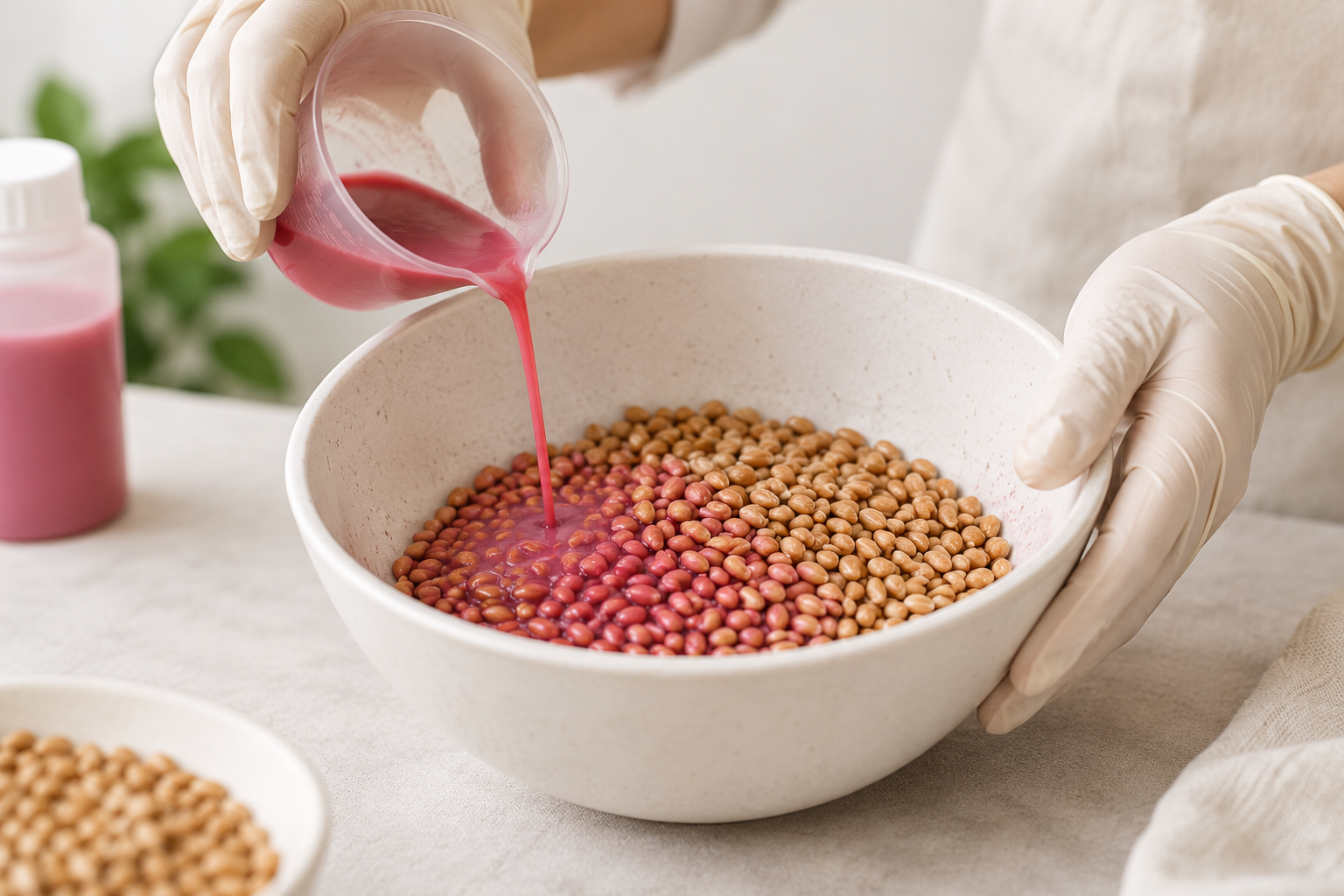
Application Technique: Dissolve the measured fungicide in 15 ml of clean water per kilogram of seed to form a thin slurry, ensuring uniform coating without cracking seed coats.
Phase 2: Biological Protection with Trichoderma viride
Biological seed inoculation delivers living fungal antagonists that colonize root surfaces throughout vegetative development:
Bio-Agent Formulation: Trichoderma viride or Trichoderma harzianum 1% WP (minimum 2×10^6 cfu/g) applied at 8 grams to 10 grams per kilogram of seed.
The Golden Rule: Always apply bio-agents at least 24 hours after chemical fungicide application, or use biological treatments exclusively, to avoid killing beneficial living spores.
Pre-Sowing Rest: Spread treated seed across clean plastic sheets under shaded tree cover for two hours to air dry before filling tractor seed drills.
Growers can explore broader application workflows in our detailed article on seed treatment benefits.
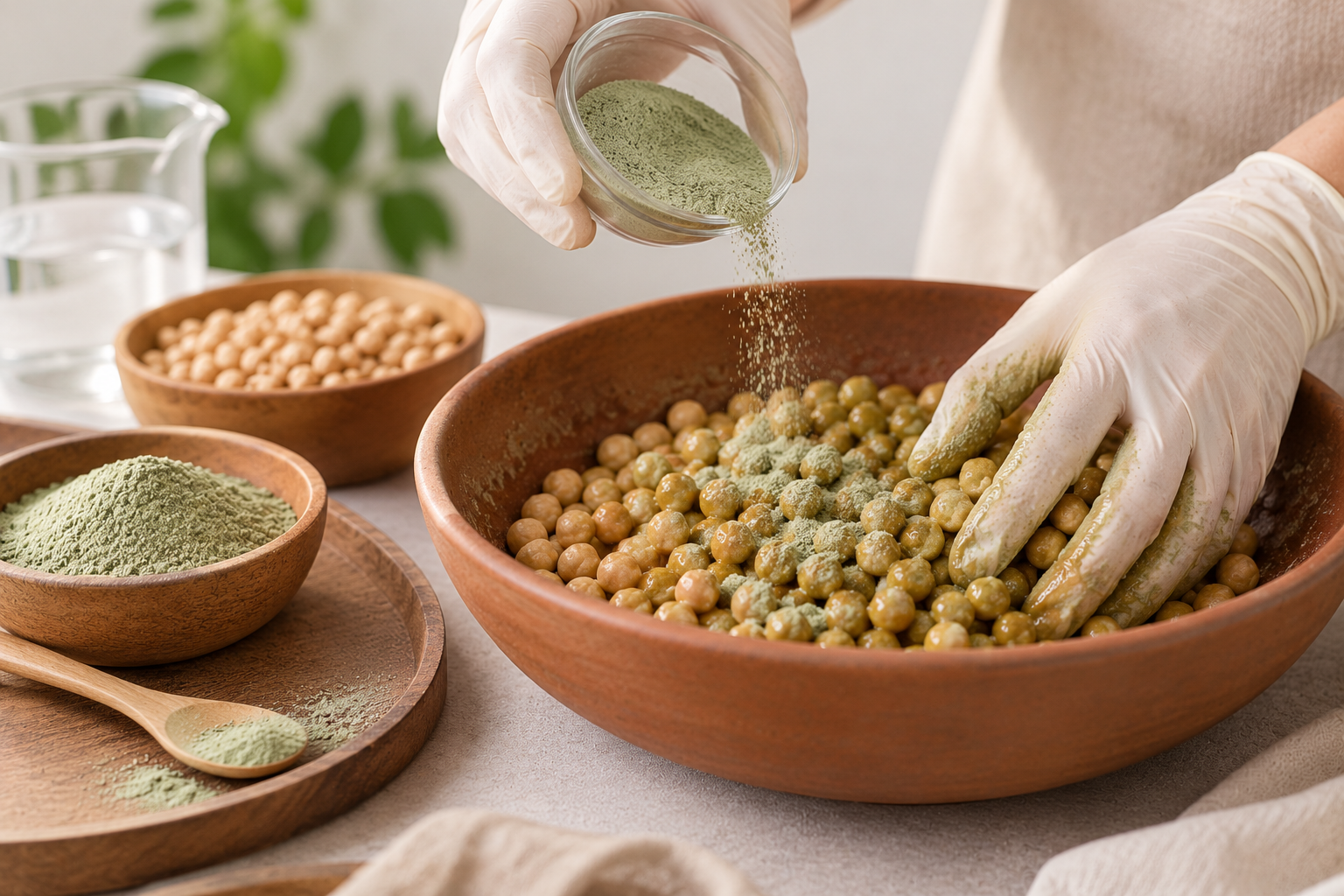
Slurry coating of certified seeds with protective fungicides and biological agents.
Crop-Specific Application Metrics: Chana vs. Jeera
Because seed coats and oil membranes differ between pulses and spices, dosage parameters must be adjusted accordingly:
1. Chickpea (Chana Seed) Treatment Schedule
Protective Bio-Inoculation: Inoculate with specific Rhizobium culture (10g/kg) combined with Phosphate Solubilizing Bacteria (PSB) to accelerate root nodulation.
Water Volume: Use 20 ml to 25 ml clean water per kg to coat thick, wrinkled seed husks thoroughly.
Handling Care: Avoid aggressive mechanical tumbling to prevent cracking the sensitive embryonic tip (radicle).
2. Cumin (Jeera Seed) Treatment Schedule
Protective Bio-Inoculation: Emphasize high-potency Trichoderma formulations mixed with mild organic jaggery solution (2% concentration) to ensure uniform sticker adhesion on small seeds.
Water Volume: Use no more than 10 ml to 12 ml water per kg of seed to prevent seed clusters from clumping together.
Sowing Readiness: Seed must be completely dry to flow freely through manual broadcasting fingers or narrow tractor drill pipes.
To ensure uniform field germination and maximize disease resistance, always source verified cumin seeds from tested seed lots.
Cultural Field Management Practices to Prevent Sukharo
Relying solely on seed treatment without addressing physical soil conditions limits field effectiveness. Combine seed dressing with these agronomic routines:
Deep Summer Solarization: Plough empty fields with a disc plough during May and June. Exposing subsoil to intense summer heat kills up to 70% of resting fungal spores.
Organic Soil Fortification: Mix 2.5 kg of Trichoderma culture into 500 kg of well-decomposed Farm Yard Manure (FYM). Let it incubate for one week under damp shade before applying it as a basal dressing per acre.
Precision Moisture Control: Avoid heavy flood irrigation immediately after emergence. Saturated, poorly aerated topsoil weakens young root cells, inviting rapid pathogen invasion.
Optimized Crop Succession: Rotate fields out of chana and jeera every two seasons by integrating restorative pulses like Pigeon Pea Seed into your long-term seasonal rotation.
Planning multi-season planting schedules is straightforward when following the operational frameworks outlined in our guide on season-wise crop planning.
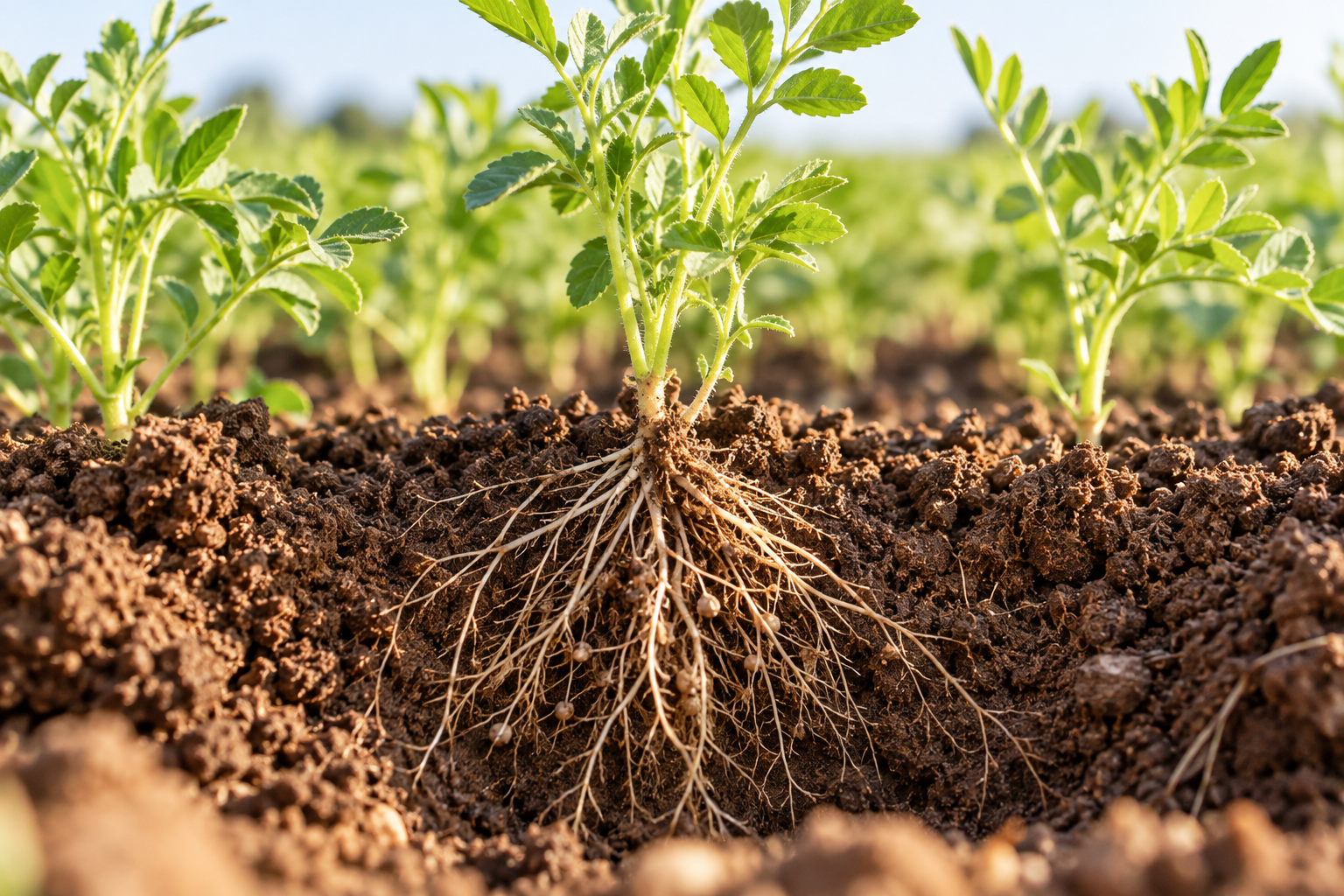
Vigorous, disease-free white root network resulting from certified seed treatment.
4 Critical Errors That Lead to Sukharo Recurrence
Farm inspections reveal four recurring field mistakes that undermine disease prevention efforts:
1. Sowing Untreated Seed Grains from Previous Harvests
Using grain saved from domestic storage bins carries dormant pathogen mycelium inside seed wrinkles. Even in fertile soil, these infected seeds succumb to wilt within three weeks of emergence.
2. Mixing Chemical Fungicides and Bio-Agents Simultaneously
Dumping chemical fungicide powders and living Trichoderma dust into the same bucket destroys beneficial living fungal spores instantly. Chemical fungicidal treatment must precede bio-inoculation by at least 24 hours.
3. Over-Soaking Cumin Seeds in Excessive Water
Soaking cumin seed in standing water containers for prolonged hours leaches essential germination enzymes, triggers seed rot, and makes the seed coat gummy. Apply only fine mist slurries.
4. Planting Degenerated Commercial Grain Lots
Purchasing unbranded seed bags from open mandi stalls increases the risk of introducing foreign fungal strains into clean soils. Sourcing certified, verified planting material from trusted institutions like Akshay Seeds ensures high germination percentages and genetic disease tolerance.
Frequently Asked Questions (FAQs)
What causes Sukharo Rog in Chana and Jeera crops?
Sukharo Rog is primarily caused by soil-borne fungal pathogens belonging to the Fusarium oxysporum complex, which enter root vascular vessels and block water and nutrient transport.
Can Sukharo Rog be cured after symptoms appear on plants?
No, plants displaying severe vascular browning and complete wilt cannot be cured. Effective management relies on pre-sowing chemical seed treatment, biological inoculation, and clean cultural field practices.
What is the ideal fungicide dosage for chana seed treatment?
Treat chana seeds with Carboxin 37.5% + Thiram 37.5% DS at a rate of 2.5 g to 3.0 g per kilogram of seed, ensuring uniform coverage over seed coats.
How does Trichoderma viride protect crop roots against wilt?
Trichoderma acts as an antagonistic bio-agent that colonizes root surfaces, parasitizes harmful Fusarium hyphae, and secretes anti-fungal enzymes that prevent pathogen penetration.
Safeguard Your Harvest with Certified Disease-Resistant Seeds
Securing peak pulse and spice yields begins with clean, verified foundation seeds. Effective seed treatment paired with disease-resistant seed genetics protects your crop against vascular wilt, preserves plant population density, and secures your seasonal return on investment.
Protect your fields against Sukharo Rog this season. Explore our complete range of tested varieties in the Akshay Seeds products directory, review verified field trials inside the Akshay Seeds gallery, or contact our technical team directly via our contact us portal to secure your certified planting stock!